In This Article
Need fishing reel or tackle parts? Upload drawings for a quote
Direct Answer
When reel brands move existing parts to a new supplier, or add a second source, the complaint we hear most is: the drawing did not change at all, but the reel feels different.
The reason is that the real condition of current parts is rarely all on the drawing. This is the information most easily lost in a transfer:
- Which side of the tolerance dimensions have consistently sat on.
- Deburring, chamfering and cleaning practice not on the drawing.
- Size allowances before and after anodizing.
- Shims selected at assembly based on measured parts.
- Long-standing deviations accepted under concession without a drawing change.
A safe transfer usually takes five steps:
Measure current parts → hand over hidden process knowledge → transfer and recheck tooling and gauges → validate new parts → cut in by lot.
01|Why the drawing stays the same but the feel changes
The drawing defines tolerance ranges, but reel feel depends on the actual condition of the parts. In a transfer, this off-drawing information easily breaks:
| Hidden information | Example | Risk in a transfer |
|---|---|---|
| Where dimensions sit | Bearing bores consistently in the lower half of the tolerance | New supplier machines to nominal, reel end play increases |
| Off-drawing processes | Gear deburring, hole chamfers, cleaning method | Noise, burrs or assembly scratches |
| Finishing allowances | Size left for anodize thickness before finishing | Different coating or allowance makes fits tighter or looser |
| Selective assembly | Shim thickness chosen by measurement, or parts machined as pairs | New distribution breaks the existing selection rules |
| Long-standing concessions | One dimension slightly out for years, with assembly tuned around it | New parts made exactly to drawing turn out “wrong” |
| Verbal cosmetic rules | Which faces may show light tool marks, which must be flawless | Different judgment, rejections and disputes |
The last case deserves attention. If current parts have carried a deviation for years, the reel adjustment has adapted to it. A new supplier that follows the drawing exactly produces parts that differ from the current ones.
02|Before the transfer: measure a sample of current parts
The first step is not sending drawings to the new supplier. It is finding out what current parts actually look like.
We suggest:
- Take current parts from several lots, for example twenty or thirty pieces covering different production dates.
- Measure the real distribution of key dimensions, especially bearing bores, gear center distance, axial dimensions and mating faces.
- Collect assembly data, such as shim selection records and common adjustments.
- Gather incoming inspection and defect records to learn what problems the current parts have had.
- Give the measured distribution to the new supplier as machining targets, not only the drawing tolerances.
The target then changes from “inside the tolerance” to “in the same region as current parts,” which is what protects the feel across the transfer.
03|How to hand over hidden process knowledge
| Item | Where it comes from |
|---|---|
| Latest drawings and design change records | The brand’s design team |
| Inspection specification and methods | The brand’s quality team, the current supplier’s records |
| Cosmetic limit samples | Selected from current production and approved by the brand |
| Concession and deviation records | The brand’s incoming inspection records |
| Selective assembly rules | The brand’s assembly team or the reel assembler |
| Off-drawing process points | The current supplier if cooperative, otherwise analysis of current parts |
| Packaging method | The current supplier’s packaging and transport experience |
In practice, the current supplier may not cooperate, especially when the transfer is about price or quality. Then the current parts themselves and experience on the assembly line are the most reliable sources. Assembly staff usually know exactly which parts are “one step from not fitting.”
04|Transferring molds, fixtures and gauges
If the part uses die-casting, injection or forging tools or dedicated gauges, the tooling has to move too:
| Step | What to do |
|---|---|
| Confirm ownership | Confirm the brand owns the tools and gauges, complete the transfer paperwork |
| Inspect before moving | Check condition, wear and damage, collect maintenance records and shot counts |
| Ship and receive | Protect against rust and damage, inspect again on arrival |
| Trial run | Run trials on the new factory’s machines and set process parameters |
| Compare first parts | Compare first parts from the new factory with the current supplier’s parts |
| Calibrate gauges | Recalibrate gauges and confirm both sides measure the same |
If the new die-casting or injection machines differ in tonnage or specification, parameters usually have to be re-established. First parts after the trial should go through a full first article inspection. “Same tool” is not a reason to skip it.
05|Validating new parts: distributions and assembled reels
New parts are validated the same way as in a new supplier qualification:
- Compare key dimension distributions: do new parts sit in the same region of the tolerance as current parts?
- Assemble with current mating parts: confirm end play, preload and shim selection do not need to change.
- Compare complete reels: check reels built with new parts against current reels for rotation, drag, clutch and noise.
- Blind evaluation where useful: people who know the product judge without knowing which parts are which.
For the full qualification sequence, see How Reel Brands Qualify a New Fishing Reel Parts Supplier.
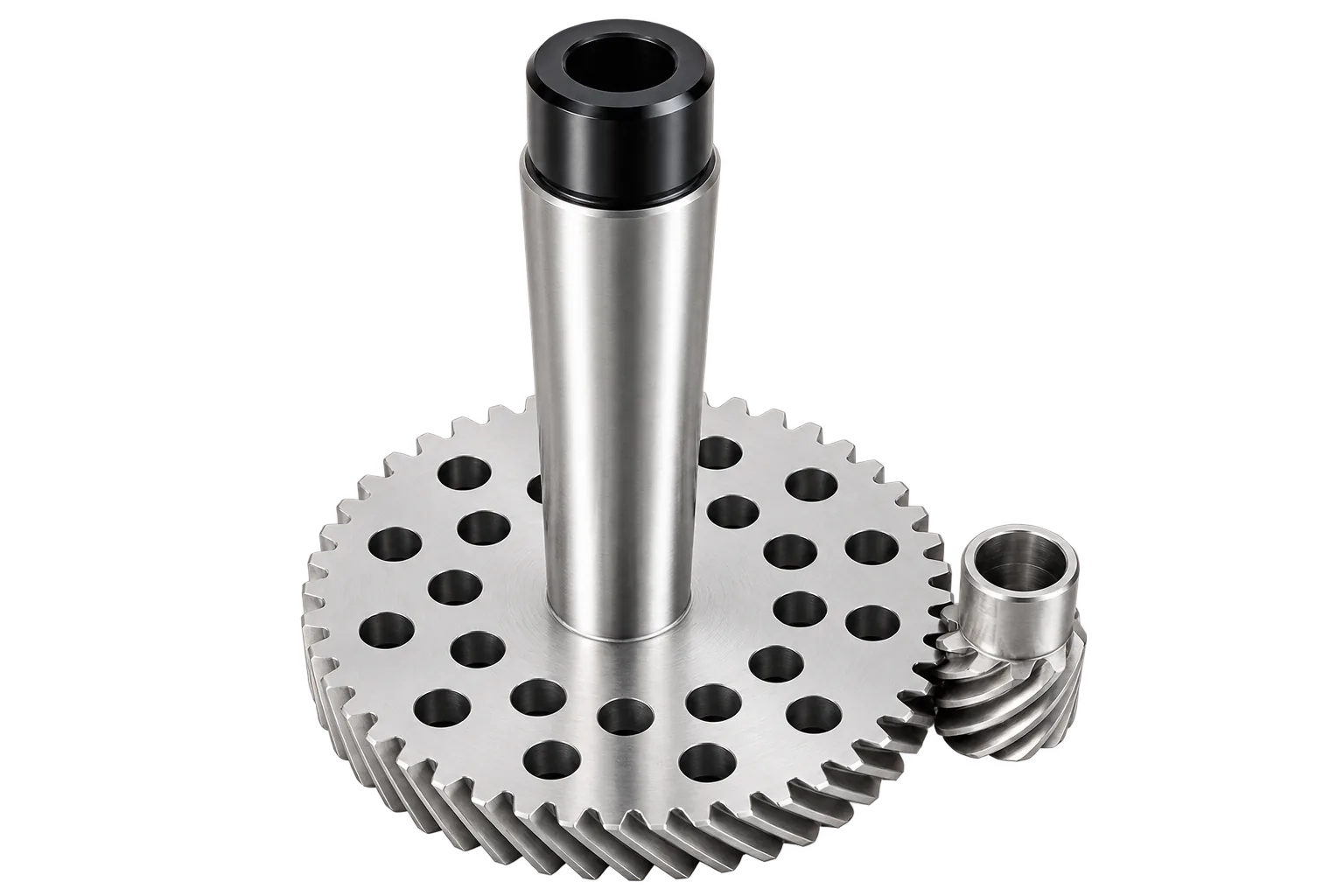
Figure: tooth geometry, center distance and bore-to-shaft fits together define how a reel drive feels. When gear parts are transferred, validate them together with the side-cover bearing positions and frame datums, not only as gears that pass on their own.
06|The cut-in plan: safety stock, phased switch, no mixing
Even after validation, a single full switch is not recommended. A safer rhythm:
| Step | Content |
|---|---|
| 1. Build safety stock | Stock up at the current supplier to cover validation and ramp-up |
| 2. Pilot lot | The new supplier runs a small lot, fully inspected and built into reels |
| 3. Partial switch | New parts take part of the volume and run alongside current parts |
| 4. Full switch | Move all volume once lot data is stable |
| 5. Keep a way back | For a period after the switch, keep the option to return to the current supplier |
Three rules during the switch:
- Record the cut-in point: log by lot or serial number when new parts start, so problems can be traced.
- No mixing: do not mix old and new parts in one assembly lot, especially anodized parts that must match on the same reel.
- Service parts stay interchangeable: confirm reels already sold can take new parts, and new reels can use old parts in stock.
There is no fixed safety stock quantity. It depends on validation time, lead time and risk. The principle is to cover the whole validation and ramp-up period, with margin for one failed validation round.
07|Cosmetic parts: match both current parts and service parts
When anodized side covers, spools or handle arms are transferred, the color has to match two things:
- Current production parts: old and new parts will not share a reel, but they will be compared on the same store shelf.
- Service parts for reels already sold: a user replacing a side cover or handle should not get a visibly different color.
Select cosmetic limit samples from current production as the new supplier’s color target, and agree the viewing conditions (light source, distance, angle). The same anodizing color can look different on different aluminum alloys, so keep the alloy the same as the current part.
08|The most common transfer mistakes
| Mistake | Result | How to avoid it |
|---|---|---|
| Drawings only, current parts not measured | New parts pass, feel changes | Measure current parts and give real targets |
| Long-standing concessions ignored | Parts made to drawing do not assemble smoothly | Review concession records, update the drawing first if needed |
| Transferred tooling goes straight to production | Trial and first article problems reach production | Trial run, first-part comparison, full first article |
| Switch without safety stock | Shortage if validation fails | Safety stock covering validation and ramp-up |
| Old and new parts mixed | Problems cannot be traced, colors do not match | Record the cut-in point, no mixing within a lot |
| Service parts forgotten | Repair parts for sold reels do not fit or match | Confirm interchangeability, one cosmetic standard for service parts |
09|How Zhongde Precision handles transferred parts
- Starting from current parts: we can take the measured key dimension distribution of current parts provided by the brand as our machining targets, not only the drawing tolerances.
- Stage by stage: first article, assembly comparison and pilot lots, following the brand’s cut-in plan.
- Tooling and gauges: with in-house mold design and manufacturing, we can support incoming inspection, trial runs and adjustment of transferred tools.
- Confidentiality: we can sign an NDA before reviewing drawings and current parts.
- Parts or complete reels: we can take on parts only, or complete dual-axis reels on an OEM basis (MOQ 200 units).
Zhongde Precision has supplied Japanese customers for more than 18 years and is familiar with Japanese expectations for first articles, cosmetic limit samples and change control.
Frequently Asked Questions
Is it enough to give the new supplier the drawings?
Usually not. The drawing defines the tolerance range, while the actual position of current dimensions, deburring and chamfer practice not on the drawing, size allowances around anodizing, shim selection at assembly and long-standing concessions all affect how the reel feels. Also provide the inspection specification, cosmetic limit samples and the latest design change records, and measure a sample of current parts as the real target.
Why measure a sample of current parts first?
Because the reel feel, shim selection and preload were tuned around the actual dimensions of current parts. Measuring the real distribution of key dimensions on parts from several lots and giving it to the new supplier as machining targets puts the new parts in the same region as the current ones, not merely inside the tolerance.
What should we watch when moving tooling from the current supplier?
Confirm tooling ownership and the transfer paperwork, inspect the tool condition and get maintenance records before it moves, run trial shots at the new factory, and compare the first parts with parts from the current supplier. If the new machines differ in tonnage or specification, process parameters must be re-established, and the first parts need a full first article inspection.
Can old and new parts be mixed during the switch?
Avoid it. Agree a clear cut-in point recorded by lot or serial number, do not mix old and new parts within one assembly lot, especially anodized parts that must match in color on the same reel, and confirm that service parts are interchangeable so reels already sold can take the new parts.
How much safety stock does a transfer need?
There is no fixed quantity. It depends on how long validation takes, how long the new supplier needs to move from pilot to stable production, part lead time and the level of risk. The principle is to cover the whole validation and ramp-up period, with margin for one failed validation round.