In This Article
Need fishing reel or tackle parts? Upload drawings for a quote
Direct Answer
When a reel brand qualifies a new parts supplier, the biggest risk is not that the sample cannot be made. It is that production reels feel different, cosmetic lots do not match, or problems cannot be traced to a cause.
So qualification should not end with one good sample. It should verify four things in stages:
| What to verify | Focus |
|---|---|
| Can they make it? | Process route, equipment, which key processes are in-house |
| Can they make it consistently? | Process control, inspection methods, CTQ capability |
| Can problems be traced? | Lot traceability, change control |
| Will drawings stay confidential? | NDA, drawing access, outsourcing control |
A typical qualification sequence:
Quotation and process review → factory audit → full-dimension first article inspection → assembly validation → pilot lots → low-volume production → full production with periodic review.
The main difference between reel parts and general machined parts: a first article can pass every dimension and still change the feel of the reel. So beyond pass or fail, compare the actual distribution of key dimensions and validate in the assembled condition.
01|What do brands actually worry about at qualification?
| Risk | How it shows up in production | How to check during qualification |
|---|---|---|
| Change in feel | Rougher rotation, noise, different drag or clutch feel | Assembly validation with current mating parts, compare dimension distributions |
| Cosmetic lot variation | Anodized color and gloss differ from current parts or the last lot | Cosmetic limit samples, comparison across lots and rack positions |
| Dimensional drift | First lots pass, later lots gradually shift | CTQ capability in pilot lots, in-process inspection records |
| Unannounced changes | Material, tools or subcontractor changed without notice | Agreed change control and lot traceability |
| Unstable delivery | Rush orders or subcontractor delays cause shortages | Share of key processes in-house and capacity |
| Drawing leaks | The design appears in another brand’s product | NDA, drawing access and outsourcing control |
Most of these risks can be spotted during qualification. A well-designed qualification process costs far less than investigating after production starts.
02|Seven stages, each with pass criteria
| Stage | Brand provides | Supplier submits | Pass criteria |
|---|---|---|---|
| 1. Quotation and review | 2D/3D drawings, CTQs, annual volume, inspection specification | Quotation, process route, manufacturability review | Sound process route, risks identified |
| 2. Factory audit | Audit checklist | Equipment, inspection, process control and traceability, shown on site | Key processes under control |
| 3. First article | Inspection specification, cosmetic requirements | Full-dimension report, material certificates, finishing records | All dimensions and appearance conform |
| 4. Assembly validation | Current mating parts or complete reels | First article parts | Feel and function match current parts |
| 5. Pilot lots | Cosmetic limit samples, packaging requirements | Lot inspection data, CTQ capability, cosmetic comparison | Stable CTQ capability and appearance |
| 6. Low-volume production | Purchase orders | Outgoing inspection records | Consecutive lots without major issues |
| 7. Full production | Periodic review requirements | Change notifications, quality data | Sustained stability |
The key is that every stage has defined submissions and pass criteria, and the next stage starts only after the previous one passes. Skipping assembly validation or pilot lots is the most common reason problems appear after qualification.
03|What to focus on in a factory audit
An audit can be on site, or a video audit can be used as a first screen. Rather than floor space and machine count, focus on questions like these:
| Area | Key questions |
|---|---|
| Process and equipment | What is the process route for this part? Which steps are in-house and which are outsourced? How are outsourced steps controlled? |
| Inspection | What measures the key dimensions (CMM, profile, roughness, hardness, torque)? Who measures? |
| Process control | How are first-piece, in-process and last-piece checks done? What happens when something is out? How long are records kept? |
| Surface finishing | Is anodizing in-house or outsourced? How is color approved? How are rack position and lot differences controlled? |
| Traceability | Can a finished lot number be traced to material lot, machining date, machine and operator? |
| Change control | How are changes to material, machines, methods or subcontractors approved internally and notified to customers? |
| Confidentiality | Where are customer drawings stored, who can see them, and how are revisions and scope controlled when work is outsourced? |
During the audit, ask the factory to take a similar part currently in production and trace it from drawing and process sheet through first-piece and in-process records to outgoing inspection. Being able to follow that trail smoothly is more convincing than any presentation.
04|First article inspection: every dimension, material and appearance
The first article is the first formal confirmation that the part was made to the drawing. Ask for:
- Full-dimension inspection: number every dimension on the drawing and record each measured value, not only the CTQs.
- CTQs marked separately: measurement method, location and gauge for key dimensions should match the brand’s method.
- Material evidence: material grade, temper and the mill certificate.
- Finishing records: anodize thickness, color approval, and the effect of the coating on functional dimensions.
- Cosmetic check: scratches, dents, color variation and engraving against the cosmetic requirements.
Avoid a first article of only one or two pieces. A few more pieces give an early view of the spread.
05|Assembly validation: passing parts do not guarantee the same reel
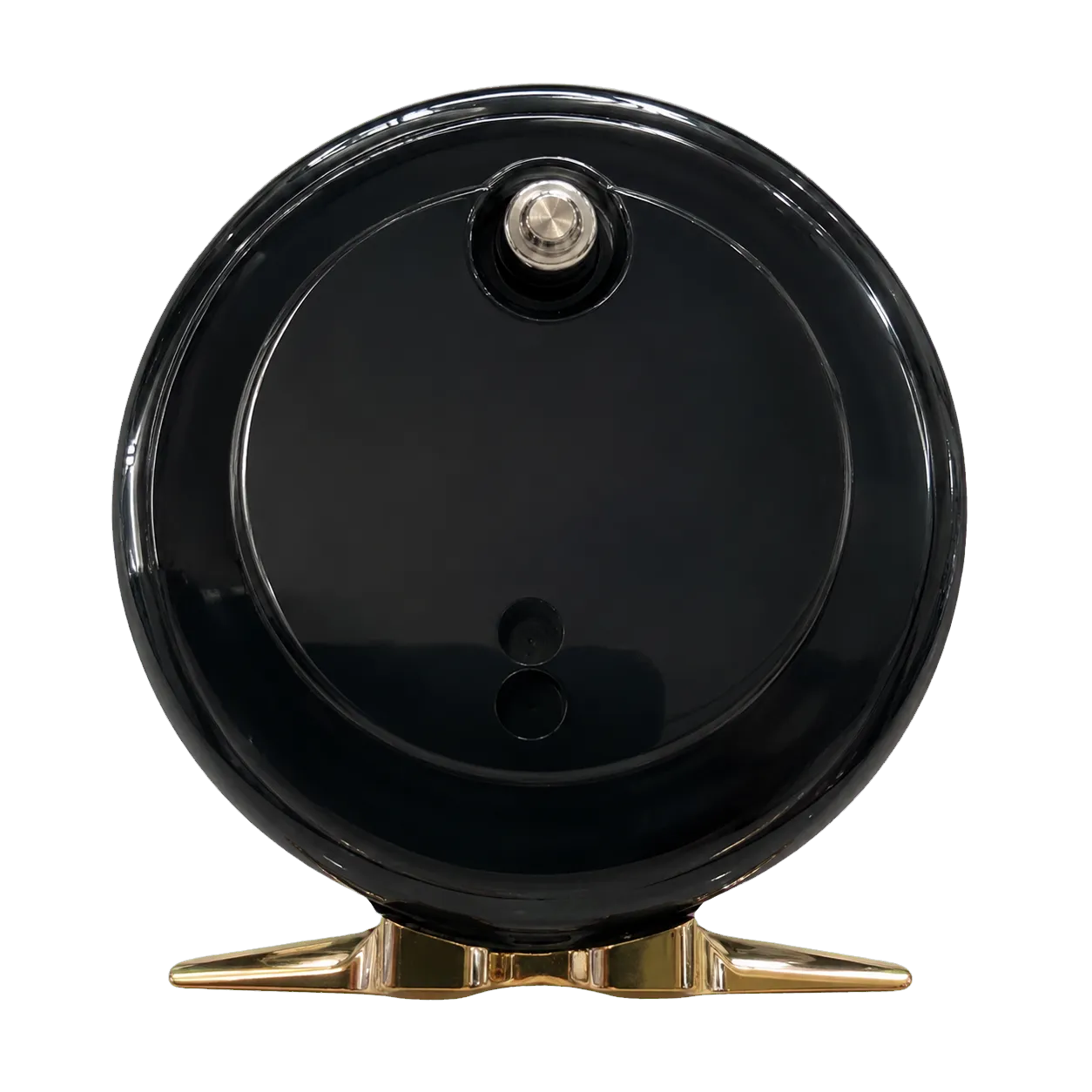
Figure: a side cover locates bearings, supports adjustment mechanisms and, together with the opposite cover, defines the shaft line. A part like this can pass on its own and still assemble differently from the current part.
This is the step most often overlooked when qualifying reel parts.
Passing only means a dimension is within tolerance. It does not say where in the tolerance it sits. The current supplier may run bearing bores, gear center distance or axial dimensions consistently at one side of the tolerance, and the reel feel, shim selection and preload were tuned around that condition. If the new supplier lands at the other side, every part passes, but end play and preload in the reel change, and the user feels a different reel.
Assembly validation therefore works best like this:
| Method | Purpose |
|---|---|
| Compare actual distributions of key dimensions | See whether new and current parts sit in the same part of the tolerance |
| Assemble with current mating parts | Confirm end play, preload and shim selection do not need to change |
| Compare reels with new parts against current reels | Smoothness, drag, clutch and noise item by item |
| Blind evaluation where useful | People who know the product judge without knowing which part is which |
| Durability or environmental tests where needed | Confirm long-term and saltwater performance |
If differences appear, the brand and supplier can adjust the machining target values so the new distribution moves toward the current one. That is far easier than repeated selective fitting on the assembly line later.
06|Pilot lots: judge stability, not one or two parts
The first article and assembly validation show the part can be made. Pilot lots show it can be made that way every time.
In the pilot stage, confirm:
- CTQ capability: lot data and a capability index such as Cpk for the key dimensions, to confirm the process is stable.
- Lot-to-lot consistency: preferably more than one lot, so changes from material lots, tool changes and shifts become visible.
- Anodized appearance: color and gloss across lots and rack positions, compared with the cosmetic limit samples.
- Matching inspection methods: the supplier’s outgoing inspection and the brand’s incoming inspection must agree, so the two sides are not measuring different things.
- Packaging protection: whether cosmetic parts rub or scratch each other in transit.
07|Cosmetic lot consistency
For side covers, spools and handle arms, anodized color consistency across lots often worries buyers more than dimensions do. Agree in advance on:
- Cosmetic limit samples: the acceptable range of color, gloss and blemishes, defined by physical samples rather than words.
- Viewing conditions: the light source, distance and angle for judging, for example visual comparison under a standard light source.
- Matching sets: whether several anodized parts on the same reel must harmonize and ship as matched lots.
For how anodized color is controlled in practice, see our article on cosmetic finish control for anodized aluminum reel parts.
08|Change control and confidentiality
After qualification, the most common quality problems come from changes nobody announced. Put these rules into the agreement at the qualification stage:
| Item | Content |
|---|---|
| Change notification | Changes in people, machines, materials or methods (the 4Ms), or in a subcontractor, are notified in advance and approved |
| Revalidation | First article or pilot data resubmitted after significant changes |
| Lot traceability | Finished lot number traceable to material lot, machining and inspection records |
| Drawing control | Permitted use, storage, revision control and outsourcing control of drawings |
| NDA | Signed before qualification, covering drawings, samples and product plans |
| Tooling and gauges | Ownership, marking and storage of molds and gauges paid for by the brand |
09|Which parts to qualify first
With a new supplier, you do not have to hand over the most critical parts first. Two common low-risk approaches:
- Easy to hard: start with parts that test the supplier’s capability but affect reel feel less, such as knobs, cosmetic side covers or handle arms. After they pass, move on to spools, frames and gears, which affect feel and service life more.
- Second source first: give the new supplier part of the volume of an existing part and run it alongside the current supplier for a while, so real lot data decides.
Both approaches control risk while building real knowledge of the new supplier.
10|How Zhongde Precision supports supplier qualification
- Stage by stage: we submit documents according to the brand’s qualification process, from manufacturability review and first article to assembly validation and pilot lots.
- Inspection: CMM, profile projection, hardness, torque and axial clearance testing. See Inspection Equipment & Quality Validation.
- Main processes in-house: molds, CNC precision machining, anodizing and painting, and assembly and testing, which supports traceability and change control.
- Confidentiality: we can sign an NDA before reviewing drawings. See our information security page.
- Parts or complete reels: we can supply parts only, or manufacture complete dual-axis reels on an OEM basis (MOQ 200 units).
Zhongde Precision has supplied Japanese customers for more than 18 years and is familiar with Japanese expectations for first articles, cosmetic limit samples and change control.
Frequently Asked Questions
What stages does qualifying a new fishing reel parts supplier usually involve?
Usually quotation and process review, factory audit, full-dimension first article inspection, assembly validation with current mating parts, pilot lots, low-volume production, and then full production with periodic review. Each stage should have defined submissions and pass criteria, and the next stage starts only after the previous one passes.
The first article passed every dimension. Why does the reel still feel different?
Passing only means the dimensions are within tolerance, not where they sit inside it. The current supplier may run bearing bores, gear center distance or axial dimensions consistently at one side of the tolerance, and the reel feel was tuned around that condition. If the new supplier lands at the other side, each part passes but end play and preload in the reel change. Compare the actual distribution of key dimensions and validate the parts assembled with current mating parts.
What data should a pilot lot provide?
Focus on lot data and process capability for the critical dimensions (CTQs), for example Cpk, and on anodized color and appearance across lots and rack positions. Also confirm that inspection methods match the brand, that packaging prevents transit scratches, and sample the functional performance after assembly.
How do we stop a supplier from changing materials or processes without notice?
Agree change control at the qualification stage: any change in people, machines, materials or methods (the 4Ms), or in a subcontractor, must be notified in advance and approved by the brand, with first article or pilot data resubmitted when needed. Also require lot traceability from the finished lot number back to material lots and machining records.
Which parts are safest to start with when working with a new supplier?
Start with parts that test the supplier capability but have less effect on reel feel, such as knobs, cosmetic side covers or handle arms. After they pass, move on to spools, frames and gears, which affect feel and service life more. Another option is to give the new supplier part of the volume of an existing part and run it as a second source for a while.