In This Article
Need fishing reel or tackle parts? Upload drawings for a quote
Direct Answer
In a baitcasting reel, pressing the thumb bar turns a clutch cam that pushes a yoke, which slides the pinion along the spool shaft and disengages it from the pin on the spool shaft, so the spool can spin freely and pay out line. When the handle is turned or the thumb bar is reset, a return mechanism and springs push the pinion back into engagement.
- Clutch stays down or re-engages poorly: worn return parts, fatigued springs, burrs, dirt, or too much or too sticky grease.
- Spool drags with the clutch open: usually the pinion has not fully disengaged.
- Clicking or slipping under load: often linked to wear of the pinion end, the spool shaft pin or the yoke.
Clutch feel and reliability depend on the cam ramps, the yoke fit, spring force, deburring and consistent assembly.
01|How the Clutch Works
| Part | Function |
|---|---|
| Thumb bar | Where the angler presses; transfers the motion to the clutch cam |
| Clutch cam | A ramped part that pushes the yoke outward as it rotates |
| Yoke | Holds the pinion and slides it along the spool shaft |
| Pinion | Engages the spool shaft pin to drive the spool; when disengaged, the spool spins freely |
| Spool shaft pin | A pin through the spool shaft that engages the slot in the pinion end |
| Springs | Provide the return force and keep the pinion engaged |
| Return mechanism | Pushes the clutch back into engagement when the handle turns |
In many baitcasting reels, turning the handle automatically re-engages the clutch, so nothing else needs pressing after a cast. The return mechanism is usually linked to the main gear or handle shaft.
02|Common Problems and Causes
| Symptom | Common causes |
|---|---|
| Stays down and does not return when the handle turns | Worn or deformed return parts, fatigued springs, burrs, dirt, sticky grease |
| Will not press, or presses very heavily | Binding parts, excessive spring force, poor cam ramps, tight fits |
| Inconsistent press feel | Inconsistent spring force, variation in cam ramps and fits |
| Spool drags with the clutch open | Pinion not fully disengaged; insufficient or worn yoke travel |
| Clicking or slipping when retrieving under load | Incomplete pinion-to-pin engagement, or worn pinion end, pin or yoke |
| Knocked open accidentally during use | Press force too light, or a thumb bar shape and position that invites accidental contact |
Note that slipping under load can also come from the one-way bearing, so tell the two apart when troubleshooting. For one-way bearing problems, see How to Choose Fishing Reel Bearings.
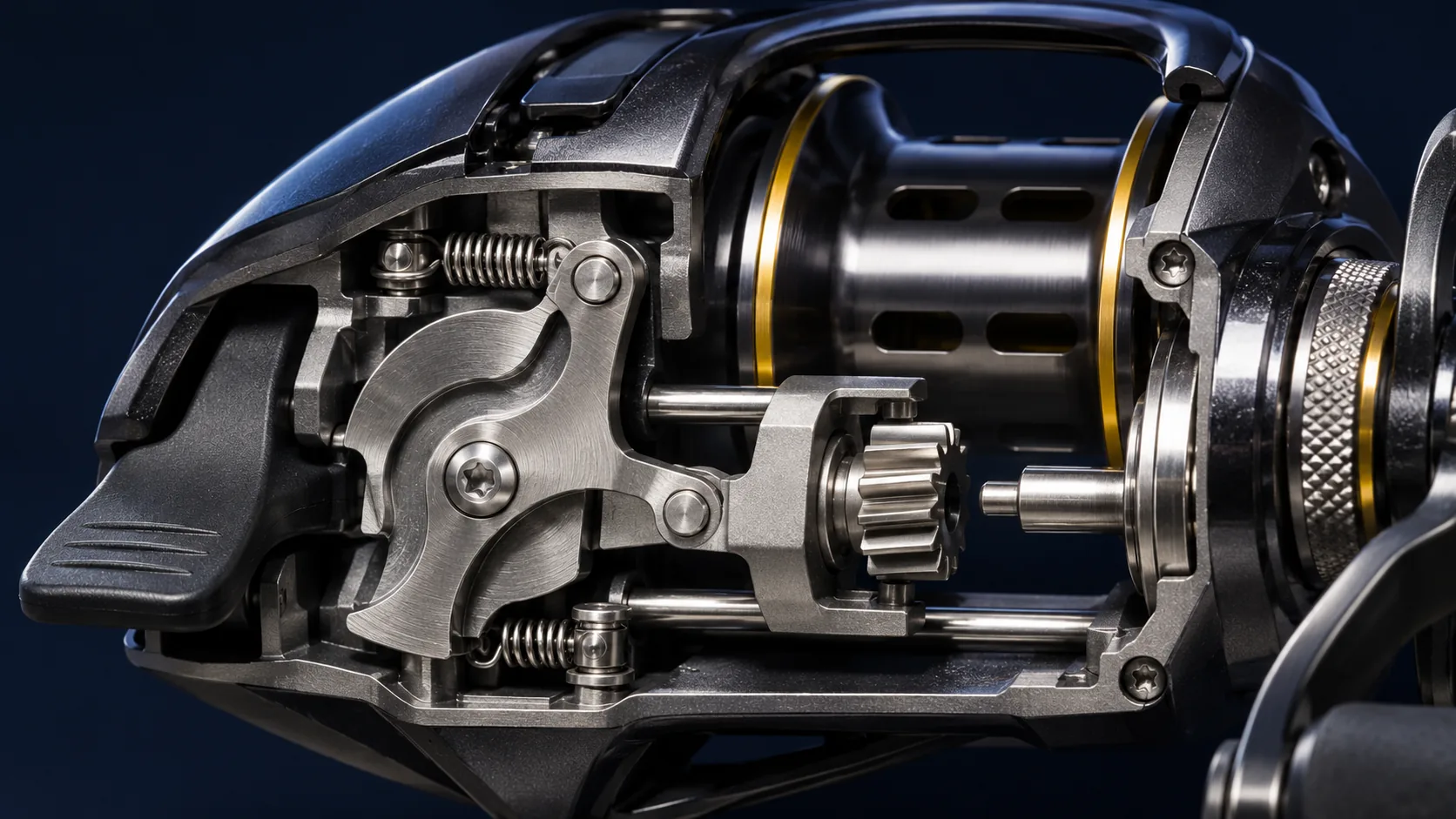
Figure: Schematic illustration. When the thumb bar is pressed, the ramps on the clutch cam push the yoke and slide the pinion off the spool shaft pin, letting the spool spin freely.
03|The Pinion Must Fully Disengage
If the pinion does not fully disengage when the clutch is open and still lightly touches the spool shaft or pin, it adds resistance to the spool during the cast, reduces distance and sometimes makes a faint rubbing sound.
- Yoke travel: ensure the pinion has enough room to move clear.
- Part dimensions: variations in cam, yoke and pinion groove dimensions stack up, so a tolerance stack-up analysis is needed.
- Validation: with the clutch open, confirm adequate clearance between pinion and spool shaft and smooth spool free spin.
For spool free spin and casting brakes, see Baitcasting Reel Casting Brakes.
04|Designing the Press Feel
Thumb bar press force has to balance easy operation against accidental release:
- Too heavy: hard to operate one-handed and tiring over a long day.
- Too light: can be knocked open while fighting a fish or retrieving, releasing line dangerously.
- Stroke: the travel distance and the feel at the end of the stroke also shape the press feel.
- Shape and position: the thumb bar should suit how anglers hold the reel.
In production, press force consistency depends on spring force and cam ramp condition, so we recommend managing it as a critical characteristic and sample-checking press force.
05|Material and Machining Points for Clutch Parts
| Part | Material and treatment | Machining and inspection points |
|---|---|---|
| Thumb bar | Aluminum or resin; cosmetic surface treatment | Strength, finish, fit and clearance to the frame |
| Clutch cam | Stainless steel or similar, heat treated where needed | Ramp shape and finish, hardness, deburring |
| Yoke | Wear-resistant material | Fit with the pinion groove, shape of the wear faces |
| Pinion | Stainless steel, bronze or similar | End slot shape and hardness; sliding fit of the bore on the spool shaft |
| Spool shaft pin | Relatively hard material | Fit in the spool shaft and in the pinion slot |
| Springs | Spring steel or stainless spring wire | Consistent spring force, incoming inspection, rust protection |
Small parts such as clutch cams can be made by stamping, CNC or precision forming, and burrs on ramps and edges are a common cause of sticking. In assembly, a small amount of the specified grease is enough; too much or too sticky a grease affects the return. For lubrication guidance, see Fishing Reel Lubrication.
06|How to Validate the Clutch
| Validation item | Purpose |
|---|---|
| Clutch endurance test | Repeated press and return; confirm reliable action and return, and check wear |
| Press force measurement | Confirm press force is within the design range and consistent between batches |
| Return under load | Turn the handle under load and confirm reliable re-engagement |
| Disengagement clearance | With the clutch open, confirm the pinion is fully clear and the spool spins freely |
| Engagement under load | Retrieve under load and confirm no clicking or slipping |
| Salt and sand | For saltwater reels, confirm operation after sand and salt exposure |
For overall reliability test planning, see How to Plan Fishing Reel Reliability Testing.
07|Information to Include in Your RFQ
| Information | Why it matters |
|---|---|
| Clutch type | Thumb bar position and shape; whether automatic return is required |
| Press feel requirements | Lighter or heavier, and whether there is a benchmark |
| Operating environment | Freshwater or saltwater |
| Endurance requirements | Clutch endurance test conditions and acceptance criteria |
| Benchmark reels | Used to compare press feel and return |
08|How Zhongde Can Help
- Clutch parts: thumb bars, clutch cams, yokes, pinions and spool shafts can be machined to drawing, with ramps, fits and deburring managed as critical characteristics.
- Assembly validation: press feel, return and disengagement clearance can be checked in the assembled reel.
- Baitcasting reel OEM: MOQ of 200 units for baitcasting reels; other reel types can be considered with sufficient volume.
- NDA first: check “An NDA is required first” in the RFQ form, and we will complete the NDA before reviewing your drawings.
Zhongde has worked with Japanese customers for more than 18 years, producing reel parts with demanding cosmetic and quality requirements.
Frequently Asked Questions
Why does the clutch not re-engage when the handle is turned?
Common causes are worn or deformed return parts; fatigued springs without enough force; burrs that catch the moving parts; sand or dirt; and too much or too sticky grease that resists movement. Start by cleaning and checking lubrication, then inspect the return parts and springs. In design and manufacturing, control the hardness, shape and deburring of the return parts.
Is it normal for the clutch to feel heavy or light to press?
Press force is set at the design stage to balance easy operation against accidental release: too heavy is hard to press, too light can be knocked open during use. If press force varies widely within one batch, the usual causes are inconsistent spring force, differences in cam ramp condition or variation in fits, so press force should be managed as a critical characteristic.
Why does the spool drag when the clutch is open?
Usually the pinion has not fully disengaged and is still lightly touching the spool shaft or pin. Possible causes are insufficient yoke travel, a worn yoke or cam, dimensional variation in the parts, or inconsistent assembly. This adds resistance during the cast and costs distance. Validation should confirm that the pinion has enough clearance from the spool shaft when the clutch is open.
Is clicking or slipping under load related to the clutch?
It can be. If the pinion does not fully engage the pin on the spool shaft, or if the pinion end, pin or yoke is worn, clicking or slipping can occur under load. A slipping one-way bearing can produce similar symptoms, so the two need to be told apart. Check the wear of the pinion end, the spool shaft pin and the yoke.
How should the clutch mechanism be maintained?
Users are generally advised to rinse gently with fresh water after use and dry the reel to avoid leaving sand and salt behind. The clutch needs only a little of the specified grease; too much or too sticky a grease affects the return. After long use, periodic professional servicing to check the yoke, pinion and springs is recommended.