In This Article
Need fishing reel or tackle parts? Upload drawings for a quote
Direct Answer
Reel brand buyers face cost-down targets every year. But reels are different from many products: once the feel changes, the money saved can come back twice over in warranty returns and reputation.
So cost reduction starts with two questions:
- Where does the money go? Break the quote down into material, machining, finishing, inspection and yield.
- What can change? Separate the dimensions that define feel from those that have no functional role.
The places where cost can usually come down without changing feel are:
Near-net blanks, combined setups, relaxed non-functional tolerances, cosmetic zoning, less masking and fewer colors, part consolidation, standardization, and stable forecasts and batch sizes.
01|What makes up the price of a reel part?
| Cost item | What it includes | Main drivers |
|---|---|---|
| Material and blank | Bar, plate, forging or die casting | Alloy grade, material utilization, blank route |
| Machining | Turning, milling, drilling, tapping | Number of setups, cycle time, machine type, tool wear |
| Secondary operations | Deburring, chamfering, cleaning | Burr location, how much is manual |
| Surface finishing | Anodizing, blasting, polishing, masking, logo | Number of colors, masked areas, cosmetic grade |
| Inspection | First piece, in-process, outgoing, cosmetic checks | Inspection rate, CMM time, 100% cosmetic inspection |
| Yield loss | Dimensional and cosmetic rejects | Cosmetic grade, handling and packaging protection |
| Packaging and freight | Trays, separators, cartons, transport | Protection needed for cosmetic parts |
| Overhead and margin | Engineering, planning, quality management | Batch size, lead time, how often orders are rushed |
Cost structures differ a lot between parts. For cosmetic parts such as spools and handle arms, finishing and cosmetic yield often weigh as much as machining time. For structural parts such as frames, material utilization and setup count matter more.
02|Why cosmetic parts often cost more than structural parts
Buyers often ask why a spool or handle arm that is not hard to machine is not cheap. The reasons are usually invisible:
- Cosmetic yield: one scratch or a slight color shift is a reject, so scrap and rework rates are clearly higher than for structural parts.
- Handling protection: every step through machining, anodizing, inspection and packing has to prevent knocks and scratches, which adds labor and packaging.
- Polishing and blasting: preparing cosmetic faces is often manual.
- Masking: bearing seats, threads and contact faces need masking, and more masking means more labor.
- Colors: several colors mean several anodizing batches and smaller batches per color.
So for cosmetic parts, starting from the cosmetic standard is often more effective than starting from machining.
03|First separate the dimensions that define feel from those open to discussion
| Category | Examples | Approach in cost reduction |
|---|---|---|
| Defines feel and service life | Bearing bore size and position, alignment of opposing bores, gear center distance, spool runout, drag face flatness, dimensions tied to end play | Do not relax to save cost |
| Affects assembly, with some room | Some tapped hole positions, locating faces, fit clearances | Designer evaluates against the tolerance chain |
| No functional role | Non-mating external contours, decorative chamfers, clearance holes, faces hidden after assembly | Often room to relax |
The biggest mistake in cost reduction is a blanket change: relaxing every tolerance by one grade, or lowering the cosmetic grade of every surface. Judge dimension by dimension and surface by surface, and keep precision and cost where they actually define the feel.
04|Nine common VA/VE options
| Option | How | Where the saving comes from | What to validate |
|---|---|---|---|
| Near-net blank | Bar or thick plate replaced by a forged or die-cast blank | Material and roughing time | Strength, internal defects, distortion, finish quality |
| Combined setups | Multi-face or five-axis machining to cut setups | Setup labor, with more stable accuracy | First article and key dimensions |
| Relax non-functional tolerances | Wider tolerances on features that do not mate | Machining and inspection time | Designer confirms the tolerance chain |
| Cosmetic zoning | Grade surfaces by how visible they are | Cosmetic yield, rework | Cosmetic limit samples |
| Less masking | Adjust masked areas or change process order | Finishing labor | Conductivity or fit requirements of functional faces |
| Fewer colors | Share colors across a series, fewer special colors | Anodizing batches and color matching | Brand and cosmetic approval |
| Part consolidation | Merge several parts into one (DFM) | Part count, assembly labor, tolerance stack | Assembly, strength and serviceability |
| Standardization | Share screws, bearings and washers across models | Purchase volume, inventory | Compatibility and after-sales |
| Better packaging | Compartment trays or separators to stop transit scratches | Cosmetic rejects | Transport testing |
Beyond technical changes, stable annual forecasts and batch sizes are a real source of savings: steadier batches mean fewer changeovers and fewer rush orders, which makes it easier for a supplier to bring cost down.
05|Be especially careful with material substitution
Replacing 7075 with 6061, or changing a brass gear to another material, looks like an obvious saving but carries the most risk:
- Strength and wear: different strength and hardness need validation for load, wear and life.
- Machining distortion: internal stress and distortion behave differently.
- Anodized color: the same anodizing color can look different on different aluminum alloys.
- Corrosion resistance: saltwater reels have higher demands on materials and finishes.
Material substitution is a significant change and usually needs a new first article, assembly validation and, where relevant, durability testing.
06|How a cost-down proposal should flow
Cost-down proposals work best when they come from the supplier, because the supplier knows best where the cost sits. A smooth flow:
| Step | Content |
|---|---|
| 1. Proposal | Supplier explains the current state, the change, expected saving, risks and validation plan |
| 2. Evaluation | Brand design and quality teams assess the effect on feel, appearance and life |
| 3. Sample validation | First article, assembly validation or durability testing, matched to the size of the change |
| 4. Approval | The brand approves through its change control process |
| 5. Cut-in | Agree the cut-in point, record lots, update drawings and inspection specs where needed |
Match the validation scope to the size of the change. A change of blank, material, machining datums or a key process is significant and needs a new first article. A change to packaging or inspection flow usually only needs the records confirmed. See the change control section of How Reel Brands Qualify a New Fishing Reel Parts Supplier.
07|Compare quotes line by line against one specification
Quotes for the same part sometimes differ widely. Before deciding which is cheaper, confirm both rest on the same assumptions:
| Item | What to confirm |
|---|---|
| Material | Grade, temper, source |
| Blank route | Bar, plate, forging or die casting |
| Cosmetic grade | Whether every surface has the same requirement |
| Inspection | 100% or sampling, measurement method for key dimensions |
| Surface finishing | Coating thickness, color, masked areas |
| Packaging | Packing method and protection |
| Tooling and fixtures | Charged upfront or amortized into the unit price |
| Delivery terms | Incoterms, lead time, minimum batch |
Asking suppliers to explain their main cost items finds real savings more reliably than comparing totals.
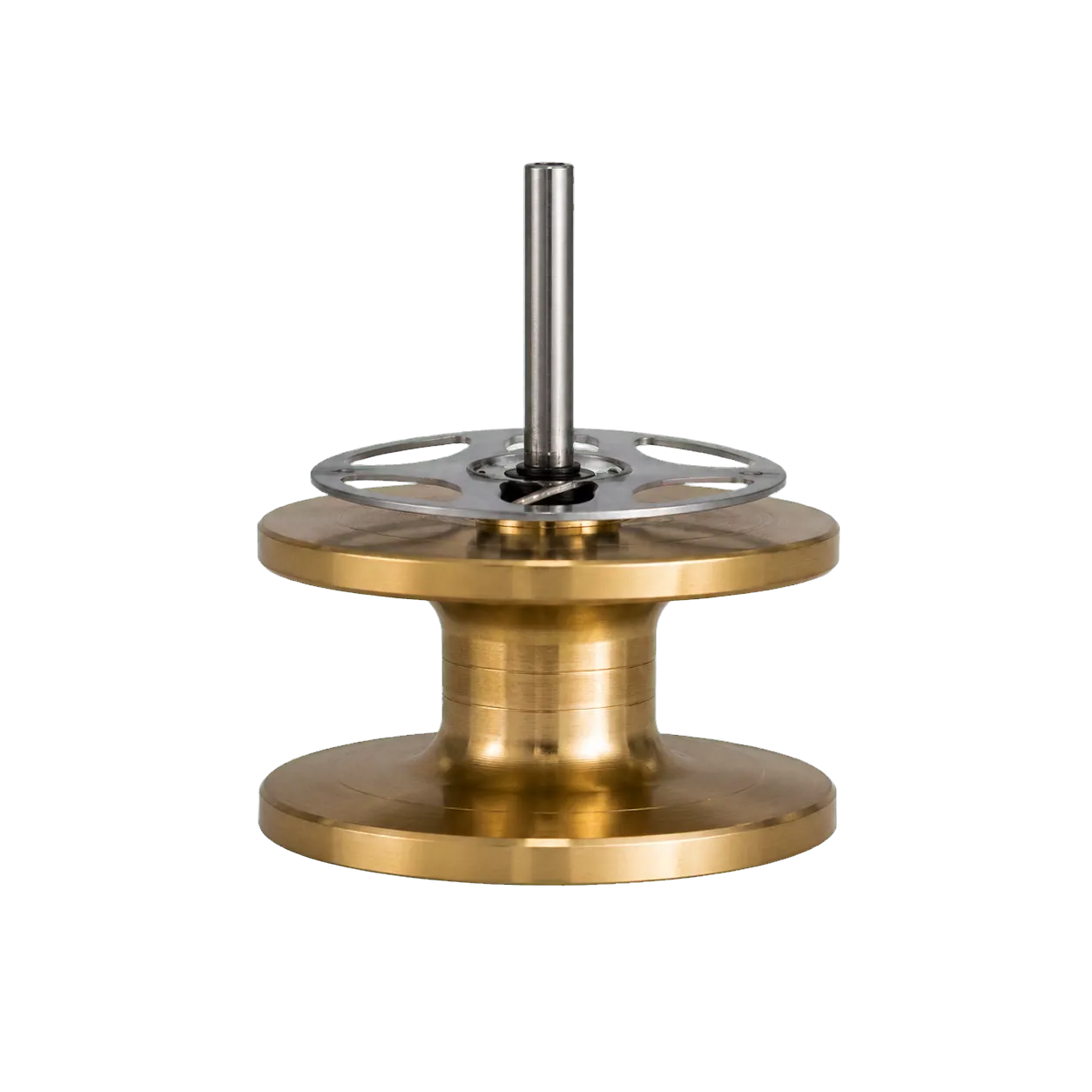
Figure: a spool is a typical part that needs both precision and appearance. Runout and balance define how it turns, and the anodized finish decides cosmetic yield. Cost reduction has to respect both.
08|How Zhongde Precision supports cost reduction
- Starting from manufacturability: at quotation and qualification, we propose cost-down options based on machining, anodizing and assembly experience, and explain the effect on feel and appearance.
- Blank routes compared together: with mold design and manufacturing, CNC precision machining, anodizing and painting, and assembly and testing in-house, bar, forging and die-casting routes can be compared side by side.
- Through change control: changes cut in only after brand approval, with first article and validation data submitted as required.
- Parts or complete reels: we can take on parts only, or complete dual-axis reels on an OEM basis (MOQ 200 units).
Zhongde Precision has supplied Japanese customers for more than 18 years and knows their expectations for consistent feel and appearance. Our cost-down proposals start from keeping both unchanged.
Frequently Asked Questions
Where should cost reduction on reel parts start?
Start with the largest items in the quote, usually machining time, cosmetic yield and surface finishing. The matching actions are combining setups, relaxing tolerances on non-functional features, setting cosmetic grades by zone, and reducing masking and color count. These usually leave feel-defining dimensions untouched, so the validation scope stays small.
Will relaxing tolerances change how the reel feels?
It depends on which dimension. Bearing bores, gear center distance, spool runout, drag face flatness and dimensions tied to end play define feel and service life and should not be relaxed to save cost. External contours that do not mate, decorative chamfers, clearance holes and faces hidden after assembly often have room. The designer should confirm any change against the tolerance chain.
What needs validating when a part moves from bar stock to a forged or die-cast blank?
Strength and stiffness, internal porosity or defects, distortion after machining, and appearance after anodizing or painting. Anodizing on die-cast aluminum is limited by the alloy, so cosmetic parts moved to die casting are often painted instead. A blank change is a significant change and needs a new first article, assembly validation and, where relevant, durability testing.
Why do two suppliers quote very different prices for the same part?
Usually because their assumptions differ: blank route, setup plan, cosmetic grade, inspection rate, packaging, whether tooling is amortized, and delivery terms. Compare quotes line by line against one specification and ask each supplier to explain its main cost items.
Does a cost-down change need a new first article?
It depends on the size of the change. A change of blank route, material, machining datums or a key process should come with a new first article and assembly validation with current mating parts. A change to packaging or inspection flow usually only needs the records confirmed. Define the scope in advance in the change control rules.