In This Article
Need fishing reel or tackle parts? Upload drawings for a quote
Direct Answer
When a Japanese custom parts brand or tackle shop orders small lots from a Chinese factory, this order avoids most problems.
| Stage | What to do | What to check |
|---|---|---|
| 1. Planning | Decide target models, quantities and colors, target price, launch date | Color and model counts drive unit price |
| 2. Inquiry | Send drawings or design concepts and reel details | Language, drawing formats |
| 3. NDA | Sign a non-disclosure agreement before sending drawings | Protecting the design |
| 4. Samples and approval | Fit samples to real reels; fix color and logo with an approved sample | Both sides keep an approved sample |
| 5. Quote and order | Check unit price, setup, shipping and who pays taxes | Who pays shipping, duty and import consumption tax |
| 6. Shipping and import | Receive by courier and pay taxes | Invoice details, consumption tax, duty |
| 7. Incoming check | Check color, fit, appearance and quantity | Compare with the approved sample |
| 8. Repeat orders | Decide colors and quantities from sales | Match color to the approved sample |
At Zhongde Precision, emails and drawing explanations can be in Japanese, CNC machining, anodizing and logos are done in house, and samples and small lots are shipped directly to Japan by international courier.
1. What to Decide Before Ordering
- Target models: start with a few best-selling models. Fit dimensions can differ between right- and left-hand models and model years.
- Quantities and colors: custom parts come in many models and colors with small quantities of each. Color and model counts directly affect unit price.
- Target price: working back from the retail price to a target part price makes material and finish choices easier.
- Launch date: allow time for samples, approval, production and transport, and work back from the launch date. See planning reel OEM lead time.
- Design: use your own original design rather than copying the look of original parts.
2. Inquiries and Language
At Zhongde Precision, inquiry emails and drawing explanations can be in Japanese. A first inquiry moves faster with:
- The target reel (baitcasting or spinning, model, year, right or left hand)
- Drawings (a 3D model and a 2D drawing in PDF) or design concepts; if there are no drawings, a sample reel
- Material, surface finish, color and logo
- Quantities (per model and per color) and the planned launch date
See preparing a reel parts RFQ for details. For quotes by part, use our pages for custom spools, custom handles and custom knobs.
3. NDAs and Design Protection
Signing a non-disclosure agreement before sending drawings or design concepts gives peace of mind. Tick “An NDA is required first” on the Zhongde Precision inquiry form, and we will complete the NDA before we look at your drawings.
Consider registering an original design before launch to help against copies. Do not use the original reel maker’s trademarks on products or sales pages. See protecting your design in OEM.
4. Samples and Approval
Sampling is the most important stage of a custom parts order.
- Making samples: samples are CNC machined. The sample cost is shown in the quote.
- Checking on real reels: you fit the samples to real reels and check fit, rotation, clearance and feel. Checking on several reels is safer.
- Approving color and logo: confirm anodizing color chips and logo position, and fix an approved sample.
- Keeping the approved sample: both the factory and you keep an approved sample as the standard for production and repeat orders.
If dimensions or colors change after sampling, record the change in drawings or email rather than verbally.
5. Reading a Quote
The unit price of custom parts mainly depends on these factors.
| Factor | Details |
|---|---|
| Material | Alloy grade and blank size |
| Machining time | Shape complexity, cutouts, porting, diamond cut edges |
| Setup | Programs, fixtures and machine preparation for each run |
| Anodizing | Processed color by color; more colors mean more setups |
| Logo | Laser engraving or printing method and positions |
| Packaging | Individual packing, instructions and screws included |
Setup costs do not depend on quantity, so the fewer the parts, the larger the share each part carries. Sharing parts across models or starting with fewer colors keeps the price down. See reel parts cost structure and VA/VE.
Besides the unit price, check who pays shipping, customs duty and import consumption tax.
6. Shipping to Japan
Samples and small lots usually go straight from the factory to you by international courier such as DHL, FedEx or EMS.
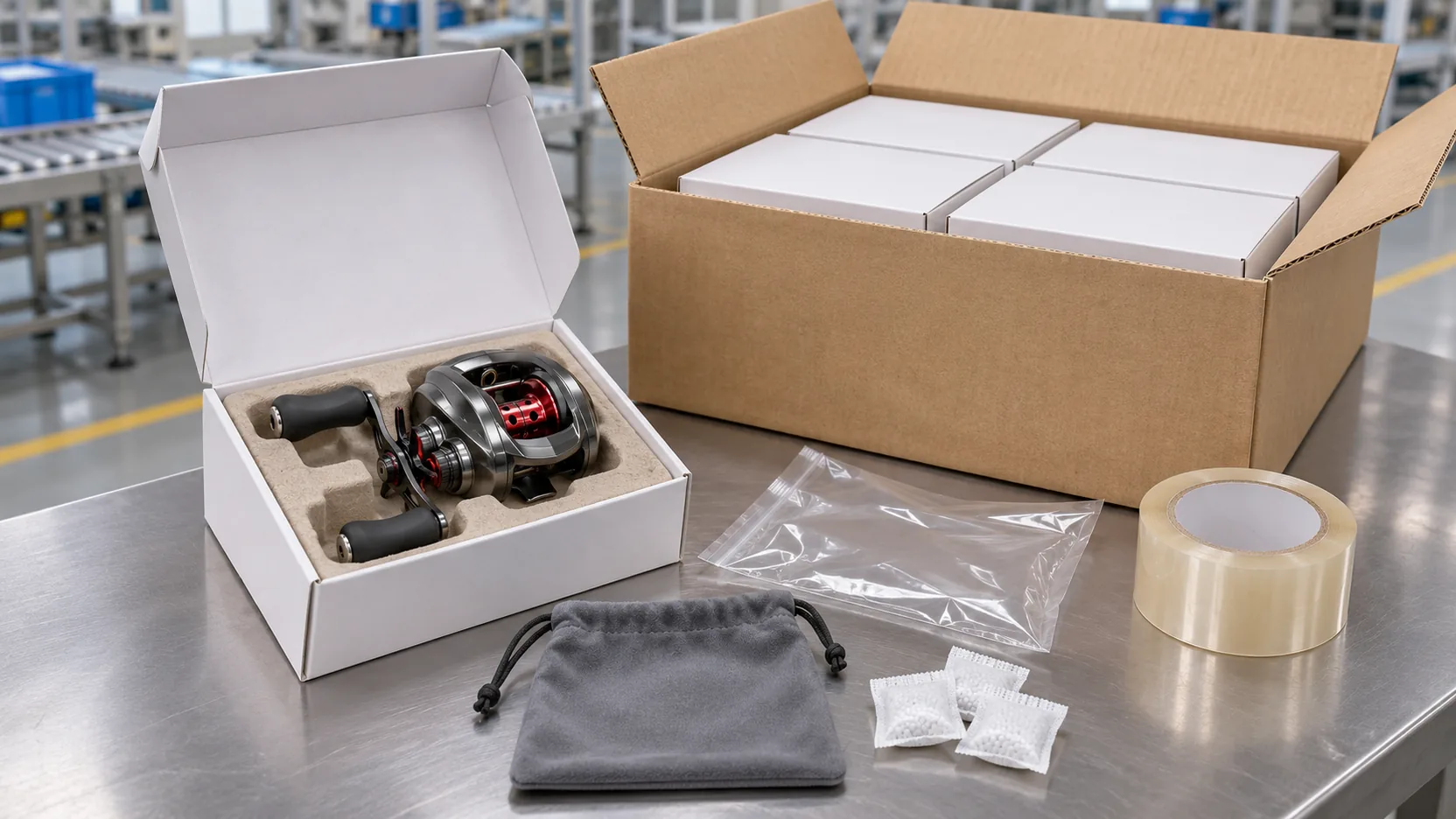
- Packing: each part is packed individually so anodized surfaces and diamond cut edges are not scratched. See reel packaging and export shipping.
- Invoice: item name, material, quantity and unit price must be accurate. Vague descriptions can slow customs clearance.
- Larger quantities: discuss the transport method for larger quantities at the quoting stage.
7. Japanese Customs Duty and Import Consumption Tax
These taxes apply on import into Japan:
- Import consumption tax: consumption tax is charged on import. For taxable businesses, it is generally creditable as input tax. Ask a tax accountant for details.
- Customs duty: rates for fishing reels and their parts depend on the item, origin and whether an EPA such as RCEP applies. Check the latest rate in the Japan Customs tariff schedule or ask the courier.
- Courier shipments: the courier usually handles clearance, pays duty and consumption tax on your behalf and bills the recipient, sometimes with an advance fee.
- Small shipments: shipments with a total taxable value of 10,000 yen or less have an exemption from customs duty and import consumption tax, but the system is under review, so check the latest treatment.
8. Checking on Arrival
When the parts arrive, check:
- Quantity: by model and by color
- Color and appearance: against the approved sample, for color difference, scratches, clamp marks and diamond cut edges
- Fit: fit a sample of parts to real reels to check they mount, turn smoothly and do not interfere
- Weight: lightened parts within the target range
If there is a problem, send photos, quantities and lot information so the cause can be found and handled quickly.
9. Repeat Orders and Inventory
- Add from sales: start with fewer colors and add the popular colors and models first.
- Match color to the approved sample: anodizing color can vary between lots, so repeat orders are matched to the approved sample.
- Use common parts: sharing parts such as knobs across models reduces inventory.
10. What Zhongde Precision Offers
- Japanese communication: inquiry emails and drawing explanations can be in Japanese.
- All in house: CNC machining, anodizing, two-tone finishes, diamond cut edges and logos.
- Baitcasting and spinning: custom spools, handles, knobs and other parts for both baitcasting and spinning reels.
- NDA: an NDA can be signed before we look at your drawings.
- Direct to Japan: samples and small lots are shipped directly to Japan by international courier.
- Experience with Japanese customers: more than 18 years producing reel parts for Japanese customers with strict cosmetic and quality requirements.
New projects can start with samples. Send drawings or design concepts from our pages for custom spools, custom handles and custom knobs.
Frequently Asked Questions
Can we communicate in Japanese?
Yes. At Zhongde Precision, inquiry emails and drawing explanations can be in Japanese. Sending a 3D model and a 2D drawing in PDF speeds up the review.
Are samples charged?
The sample cost is shown in the quote. Fit the samples to real reels to check them, fix color and logo with an approved sample, and then move to production.
How are parts shipped to Japan?
Samples and small lots are shipped directly to you by international courier such as DHL, FedEx or EMS. Who pays shipping, customs duty and import consumption tax is agreed at the quoting stage.
Are customs duty and consumption tax charged?
Import consumption tax is charged on import, and customs duty may apply depending on the item and origin. Rates depend on the Japanese tariff schedule and whether an EPA applies, so check the latest treatment with Japan Customs or the courier. Shipments with a total taxable value of 10,000 yen or less have an exemption, but the system is under review.
Can you take very small quantities?
Quantities are discussed by part and color. Each run needs programs, fixtures and anodizing setup, so very small quantities raise the unit price. We also suggest ways to keep the price down, such as sharing parts across models or starting with fewer colors.