
In This Article
Need fishing reel or tackle parts? Upload drawings for a quote
Direct Answer
Whether a reel drag is consistent depends on three things: drag washer material, lubrication and the manufacturing quality of the surrounding parts.
- Felt: smooth and low cost, but deforms under long-term compression.
- PTFE-type materials: low friction coefficient and smooth, but lower maximum drag.
- Carbon fiber: heat resistant, high maximum drag and long life; a common choice for mid- to high-end reels.
Drag fluctuates mainly because of startup stick-slip, heat during long runs, inconsistent grease, compression set of the washers and water intrusion, as well as manufacturing issues in washers, pressure plates, keyways and Belleville springs.
To make drag consistent, manage these parts as critical-to-quality characteristics and record drag curves with constant-speed line pull testing, checking the average, fluctuation, startup peak, repeatability and change after heating.
01|How a Baitcasting Reel Drag Works
Baitcasting reels commonly use one of two drag types:
- Star drag: turning the star-shaped knob at the base of the handle compresses Belleville springs and changes the pressure on the drag stack.
- Lever drag: a lever moves a pressure plate that changes the pressure on the drag washers; adjustment is faster, and it is common on large saltwater reels.
A drag stack usually alternates friction washers with metal washers that have keyways or tabs. Some of the metal washers are keyed to a rotating part (such as the gear or spool), and the others to a part that does not rotate. When a fish pulls harder than the set value, these washers slip against each other and generate friction, so the spool releases line under controlled resistance.
With other conditions unchanged, line tension during a run is roughly proportional to friction coefficient, pressure, number of friction surfaces and effective friction radius, and inversely proportional to the radius of the line layer on the spool.
Two things follow from this relationship:
- Any change in friction coefficient (heat, grease, water) directly changes the drag.
- The less line on the spool, the higher the line tension for the same drag torque. When comparing maximum drag figures, confirm how much line was on the spool during measurement.
02|Common Drag Washer Materials
| Material | Characteristics | Watch points | Typical use |
|---|---|---|---|
| Felt | Smooth, low cost | Deforms under long-term compression; changes when wet; limited maximum drag | Entry-level and light reels |
| PTFE-type materials | Low friction coefficient, smooth | Lower maximum drag | Light, finesse applications |
| Carbon fiber | Heat and wear resistant; high maximum drag; long life | Higher cost; more sensitive to grease and mating surface condition | Mid- to high-end and saltwater reels |
| Other composites | Friction and heat properties can be tailored | Stability and life must be validated item by item | As the design requires |
Dry or greased: greased washers start more smoothly with less stick-slip but usually give lower maximum drag; dry washers give higher maximum drag but are more prone to a startup peak. Decide at the design stage whether the washers run dry or greased, and which grease and how much, then keep it consistent in production.
03|Why Drag Fluctuates
| Symptom | Common causes |
|---|---|
| A jerk when the fish starts taking line | Stick-slip: static friction exceeds kinetic friction, causing a startup peak |
| Drag changes during long runs | Friction heat changes the friction coefficient and grease viscosity |
| Large drag variation within one batch | Inconsistent grease type or amount; inconsistent part dimensions and surfaces |
| Drag weaker after storage | Compression set of the washers; changes in the grease |
| Periodic surging while line runs out | Uneven washers or pressure plate, gear face runout, sticking keyways |
| Drag unstable after saltwater use | Water or salt in the drag changes the friction condition |
| Non-linear response to the adjustment knob | Inconsistent Belleville springs or springs installed backwards; fit issues |
In other words, inconsistent drag is not just a washer material problem. Many of the causes come from the manufacturing and assembly of the mating parts.
04|Manufacturing Factors That Affect Drag Consistency
| Part or factor | Effect on drag | How to control it |
|---|---|---|
| Metal washer thickness and flatness | Uneven washers distribute pressure unevenly and cause periodic fluctuation | Specify thickness and flatness; sample or 100% inspection |
| Pressure plate and gear face | Flatness, roughness and face runout affect contact and friction | Manage as CTQs; control machining and surface treatment |
| Keyway fit with shaft and gear | Too tight causes sticking; too loose causes play and noise | Control fit dimensions; remove burrs |
| Belleville springs | Spring characteristics define adjustment feel; reversed springs change the characteristic | Verify incoming characteristics; error-proof assembly |
| Grease | Type and amount directly change the friction coefficient | Specify type and amount; apply in measured quantities |
| Cleanliness | Chips, dust and oil contamination change friction | Clean parts; assemble in clean conditions |
We recommend writing these factors into drawings and inspection standards and managing them as critical-to-quality (CTQ) characteristics. See CTQ Management for the approach.
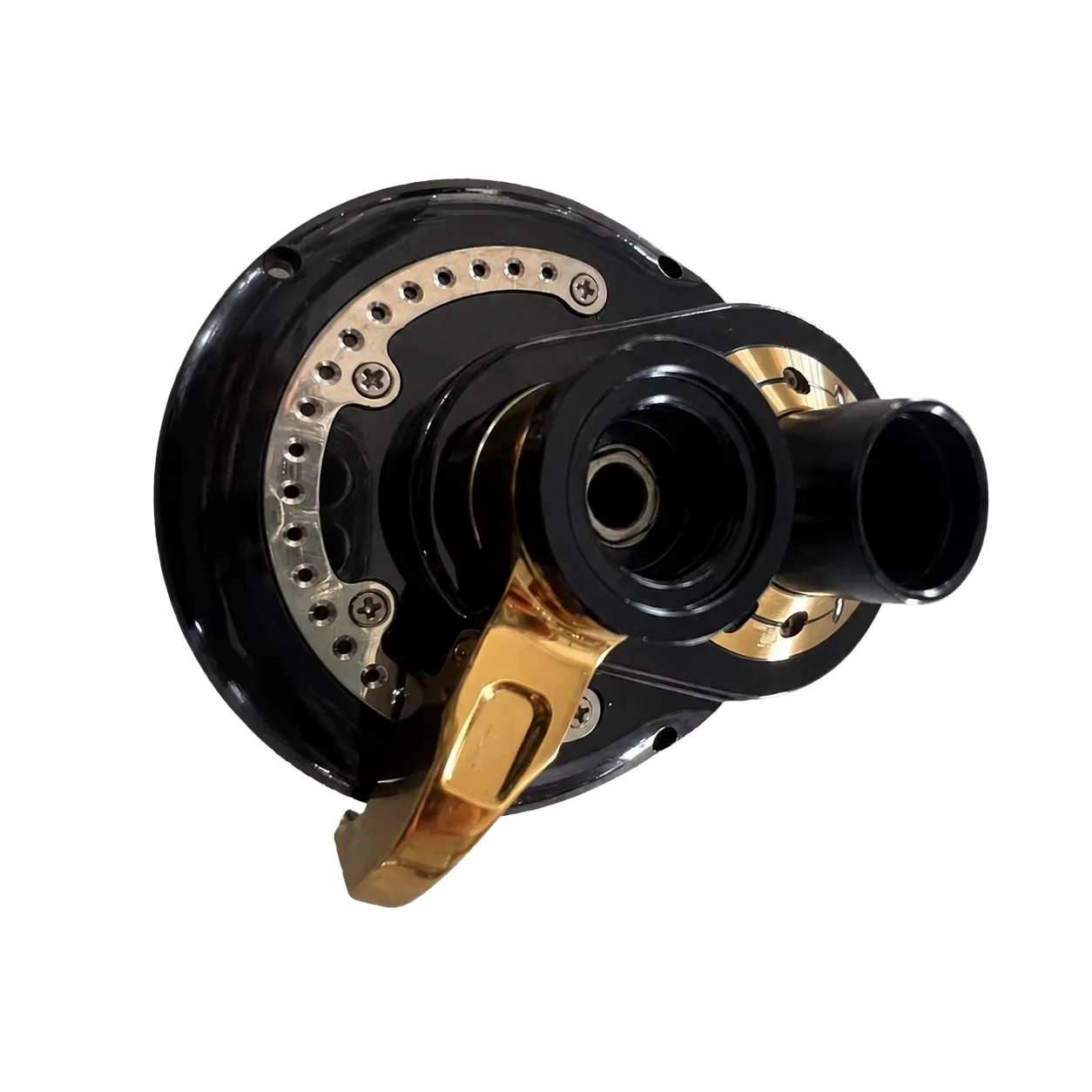
Figure: The drive side usually houses control mechanisms such as drag adjustment. Drag consistency depends closely on the flatness, fits and assembly of the parts on this side.
05|How to Test Drag Consistency
The most effective method is a constant-speed line pull test: a machine pulls line off the reel at a fixed speed while continuously recording tension, producing a drag curve. The curve shows:
| Check item | What it tells you |
|---|---|
| Average drag | Whether the set value is reached |
| Fluctuation | How much tension varies as line runs out |
| Startup peak | The spike when line starts moving; the smaller, the lower the risk of breakoffs |
| Repeatability | Consistency across repeated tests at the same setting |
| Change after heating | Whether drag drifts after a sustained run |
| Adjustment characteristic | Whether drag changes smoothly and predictably across knob positions |
| Change after storage and water | Re-test after storage and after water exposure to confirm drag holds |
Fix the test conditions: line on the spool, pull speed, ambient temperature and whether the drag has been broken in. Results from different conditions cannot be compared directly.
06|What to Include in a Drag Specification
- Maximum drag and how it is measured: line on the spool, pull speed, measurement method.
- Adjustment range and feel: range of the knob or lever, and whether click detents are required.
- Washer material and lubrication: dry or greased, and which grease.
- Consistency requirements: allowable fluctuation and startup peak, agreed by both parties in advance.
- Endurance requirements: how many runs, under what conditions, after which the drag must still meet requirements.
- Water resistance: whether a sealed drag is required.
There are no universal values for these requirements. Set them based on product position, target species and benchmark samples, and validate them with your supplier during sampling.
07|Drag Systems for Saltwater Reels
Saltwater reels need particular attention to water resistance in the drag. When seawater and salt get into the drag, the friction condition changes and the metal washers may corrode. Common practice is to use a sealed structure around the drag, choose corrosion-resistant washer materials, and tell users in the manual to tighten the drag before rinsing. For the overall approach to corrosion design, see Saltwater Fishing Reel Corrosion Protection.
08|User Instructions
Clear instructions in the manual prevent many complaints about inaccurate drag:
- Back off the drag for storage to reduce compression set of the washers.
- Do not add oil to dry drag washers, or the drag will drop noticeably.
- Tighten the drag before rinsing to keep water out of the drag.
- Service regularly; after long saltwater use, send the reel for maintenance.
09|Information to Include in Your RFQ
| Information | Why it matters |
|---|---|
| Drag type | Star drag or lever drag |
| Maximum drag target and test conditions | Determines washer material, size and number of washers |
| Target species and environment | Freshwater or saltwater; whether a sealed drag is needed |
| Washer material and lubrication | Whether specified, or to be evaluated with us |
| Consistency requirements | How fluctuation, startup peak and endurance are judged |
| Benchmark samples | Used to compare drag curves and feel |
10|How Zhongde Can Help
- Drag-related parts: pressure plates, metal washers, side covers and knobs can be machined to drawing, with flatness, fits and burrs managed as critical characteristics.
- Assembly validation: drag adjustment and feel can be checked in the assembled reel.
- Drag testing: we run a line-pull drag tester that continuously records tension as line runs out, so average drag, fluctuation and startup peak can be compared during sampling and against benchmark reels.
- Carbon fiber drag washer development: we are developing our own carbon fiber drag washers and testing them against original-equipment carbon washers. If your project needs it, we can evaluate washer selection and testing with you.
- Baitcasting reel OEM: MOQ of 200 units for baitcasting reels; other reel types can be considered with sufficient volume.
- NDA first: check “An NDA is required first” in the RFQ form, and we will complete the NDA before reviewing your drawings.
Zhongde has worked with Japanese customers for more than 18 years, producing reel parts with demanding cosmetic and quality requirements.
Frequently Asked Questions
Why does reel drag fluctuate?
Common causes include stick-slip at startup because static friction is higher than kinetic friction, heat buildup during long runs, inconsistent grease type or amount, compression set of the drag washers after long-term loading, water in the drag, and manufacturing issues such as washer flatness, pressure plate surfaces, keyway fits and Belleville spring consistency. Start by recording a drag curve with a constant-speed line pull test to see whether the problem is a startup peak, periodic fluctuation or drift after heating, then look for the matching cause.
What is the difference between carbon fiber and felt drag washers?
Felt washers are smooth and low cost, but they deform under long-term compression, change significantly when wet and offer limited maximum drag. Carbon fiber washers resist heat and wear, deliver high maximum drag and last long, which suits reels that need strong drag and saltwater models, but they cost more and are more sensitive to grease and to the surface condition of mating parts. Choose based on target species, maximum drag and price point.
Should drag washers be greased?
It depends on the design. Greased washers start more smoothly with less stick-slip, but usually give lower maximum drag; dry washers give higher maximum drag but are more prone to a startup peak. What matters is deciding at the design stage whether the washers run dry or greased, and which grease and how much, then keeping that consistent in production. Users should not add oil to dry washers on their own.
Why does drag get weaker after a reel has been stored?
A common cause is compression set: the drag washers deform permanently under long-term pressure, become thinner and generate less pressure at the same knob position. Changes in the grease can also contribute. That is why many reel manuals recommend backing off the drag for storage. During development, re-testing drag after storage can be added to the validation plan.
Can the maximum drag figures of different reels be compared directly?
Not always. Maximum drag depends on measurement conditions such as how much line is on the spool, pull speed, whether the washers are dry or greased, and whether the drag has been broken in. With less line on the spool, the same drag torque produces a higher line tension. Confirm the measurement conditions before comparing, and state your own measurement method in your specification.