
QUALITY ASSURANCE

Material Selection & Incoming Quality Control Controlled Sources · Grade Verification · Incoming Inspection · Traceability

Material grades, conditions and stock forms are selected according to strength, thermal, corrosion, wear, weight, finishing and machining requirements. Materials are sourced from major producers and approved suppliers, supported by certificates, lot information, incoming inspection and batch control.
  • Major producers and approved suppliers
  • Grade, condition and certificate verification
  • Heat-to-production batch traceability
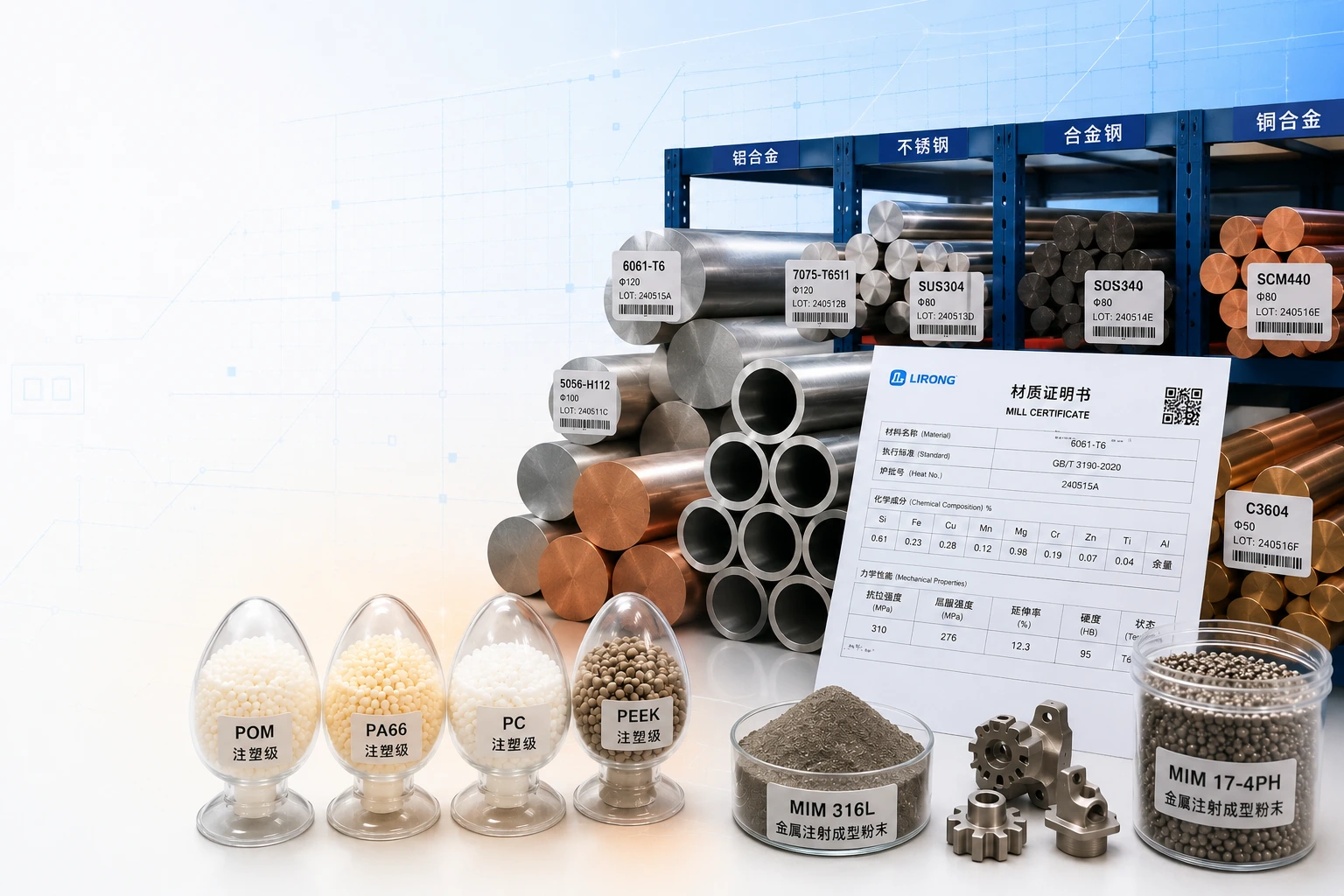
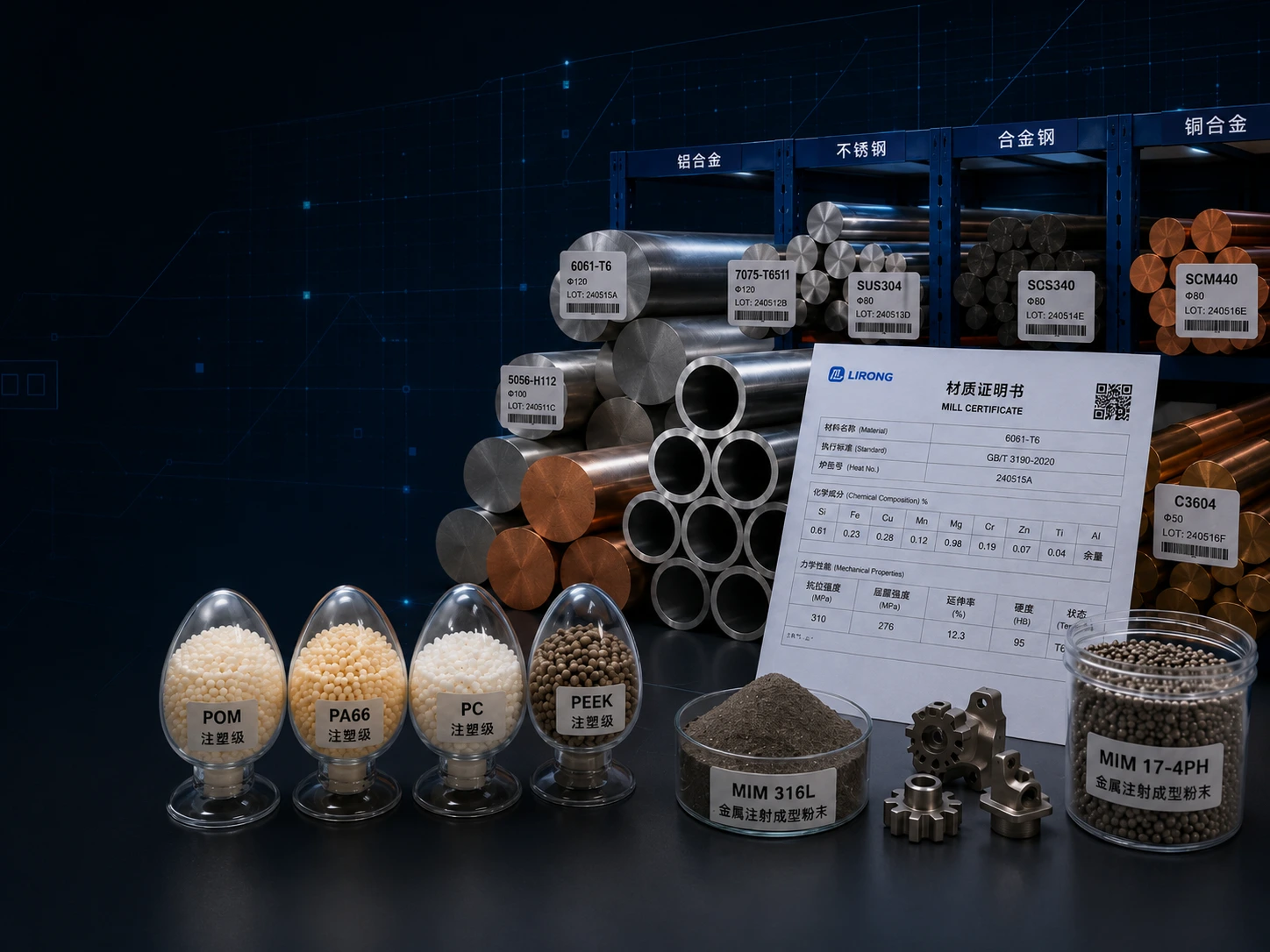
Metal, injection molding resin and MIM materials with mill certificate

Controlled Source

Major producers and approved suppliers

Mill Certificate

Grade · composition · properties

Incoming Check

Size · condition · risk-based retest

Lot Traceability

Heat · work order · finished batch

MATERIAL QUALITY FOUNDATIONS

Four Foundations of Material Quality Assurance

Material quality is not controlled only after machining. It begins with supplier selection and purchasing specifications. Source, grade, condition, heat number and documentation must correspond to the actual incoming material.

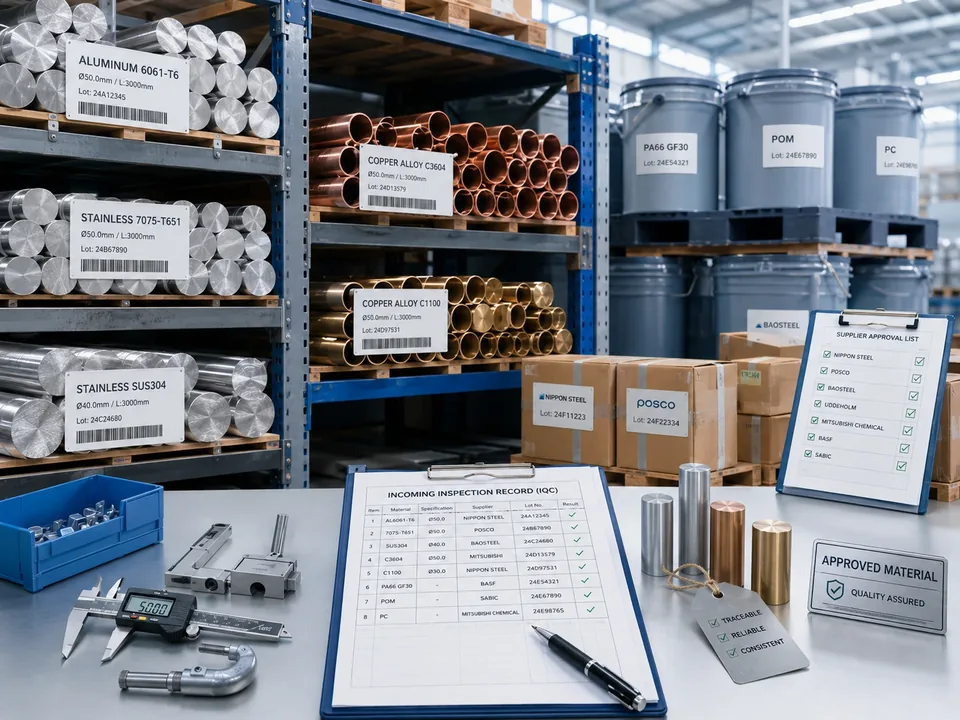
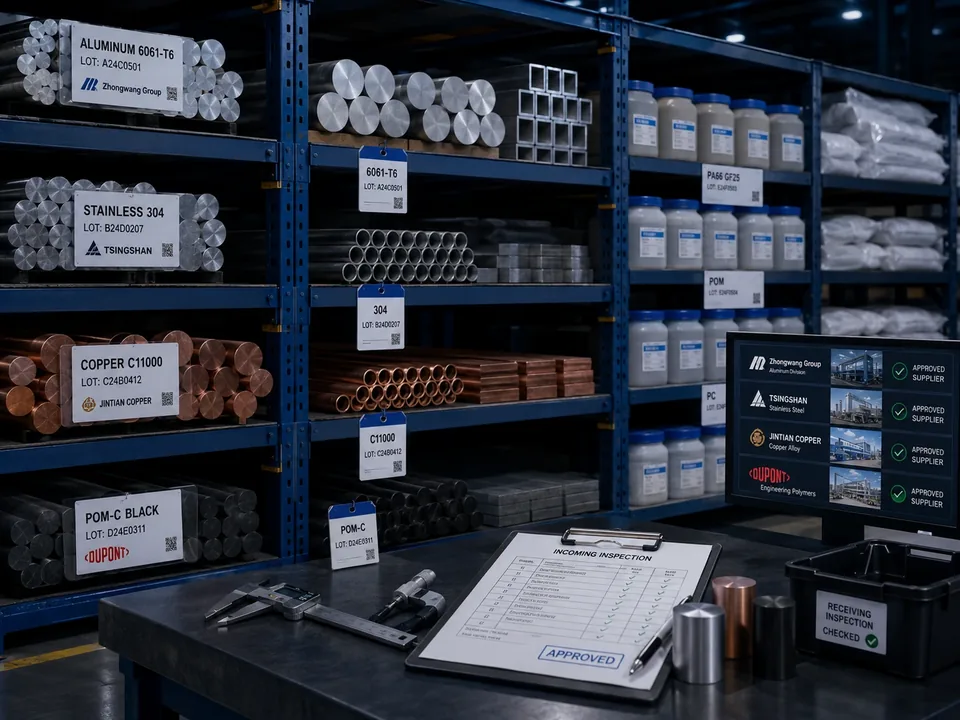
Metal and engineering polymer storage from major producers and approved suppliers 01 / 04

Reliable Sources

Materials are sourced primarily from major producers and approved suppliers to reduce uncertainty and lot-to-lot variation.
  • Major producers
  • Approved suppliers
  • Controlled purchasing
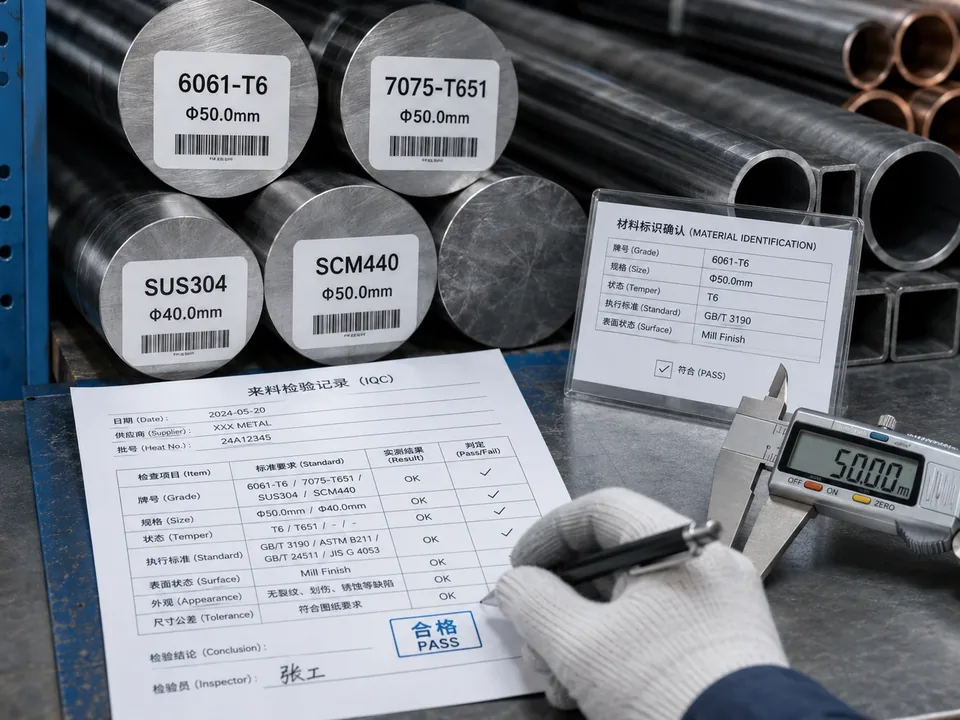
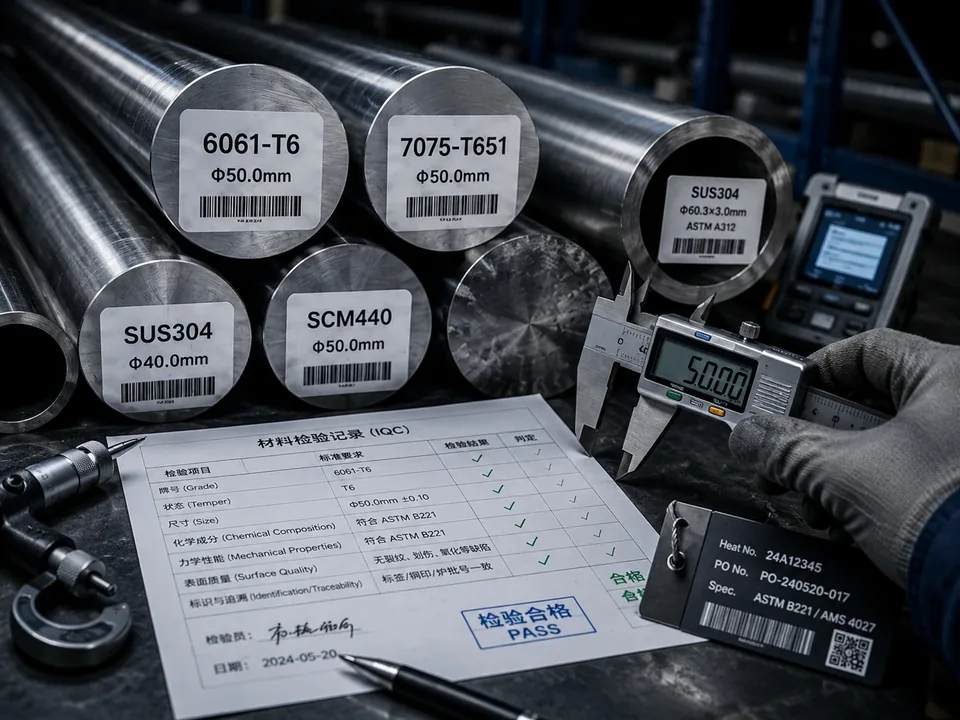
Material grade labels, incoming inspection record and dimensional verification 02 / 04

Verified Grade

Grade, temper, dimensions, applicable standard and purchase requirements are checked against the incoming material.
  • Grade and temper
  • Dimensions
  • Applicable standard
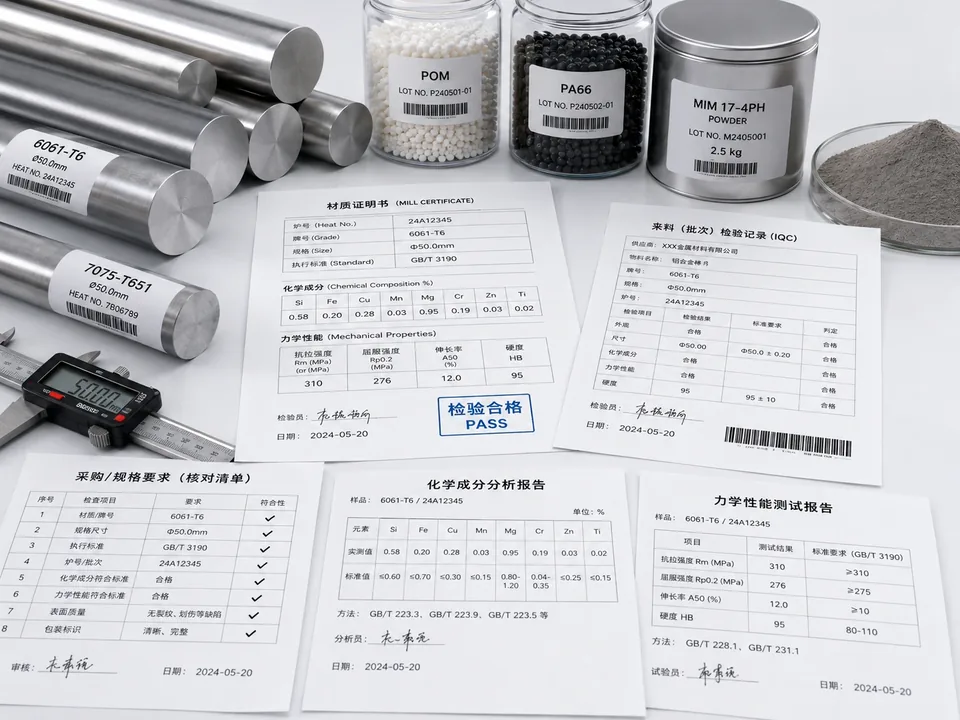
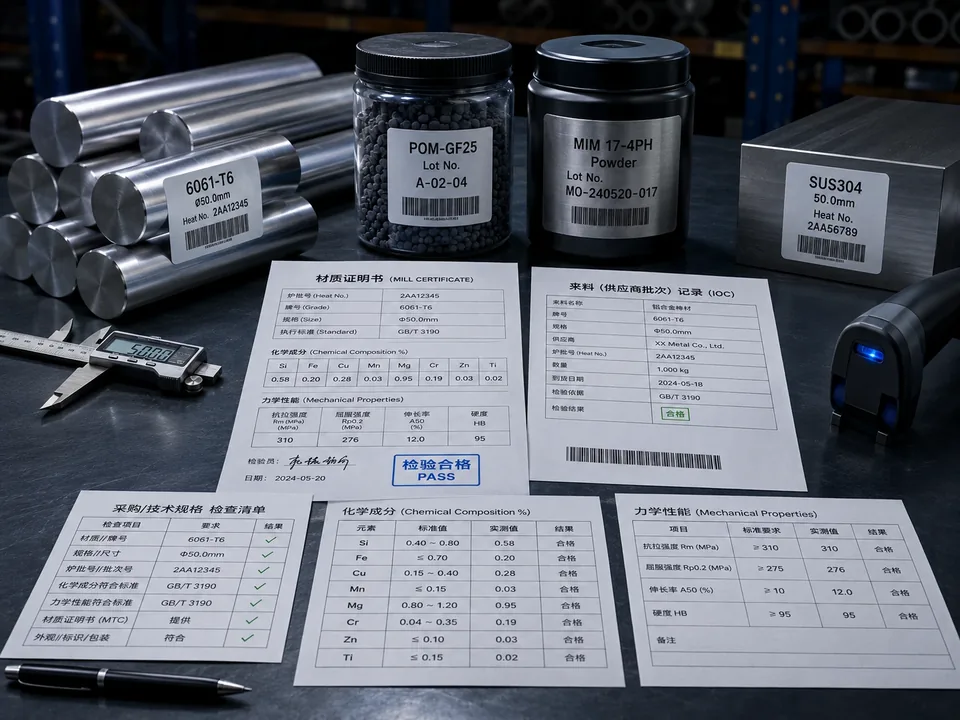
Mill certificate, composition report, mechanical property report and inspection records 03 / 04

Complete Documents

Mill certificates, heat numbers, chemical composition, mechanical properties and inspection records are matched to the material.
  • Mill certificate
  • Composition and properties
  • Incoming inspection record
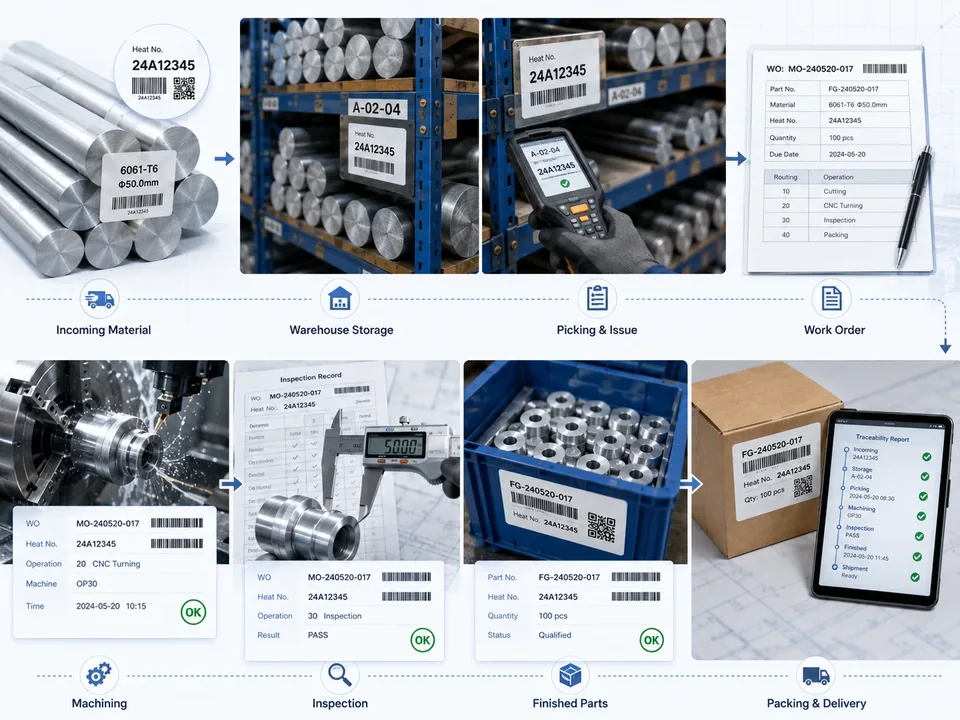
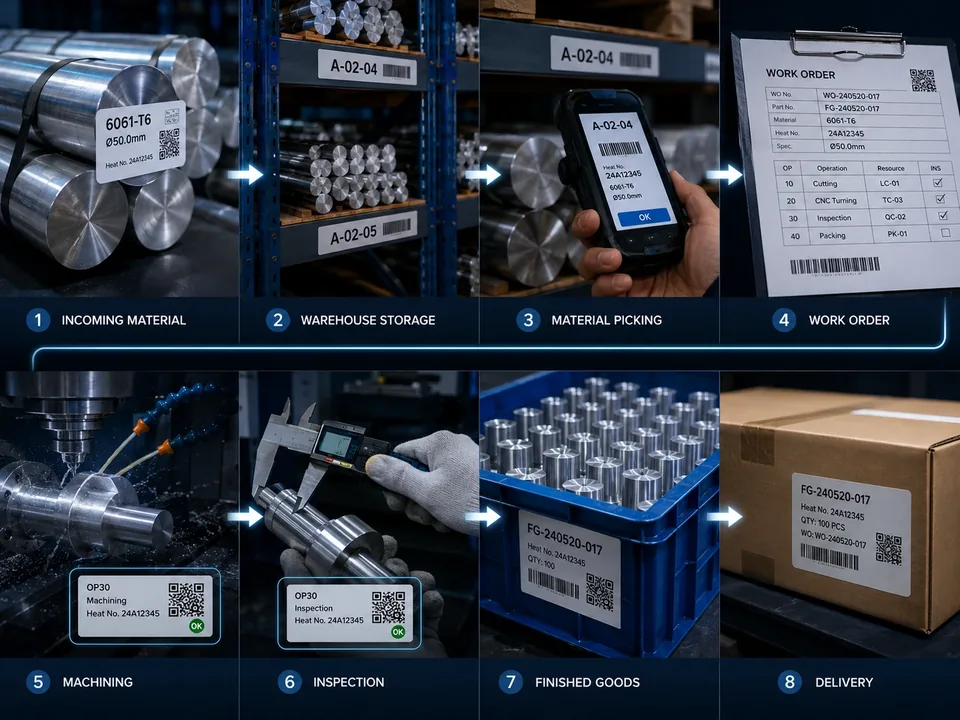
Material traceability from incoming receipt through storage, machining, inspection and delivery 04 / 04

Batch Traceability

Heat labels, barcodes, storage locations, issue records and work orders maintain traceability through production and delivery.

  • Heat identification
  • Barcode and location
  • Work order and finished lot

MATERIAL CONDITION / TEMPER

Why must material condition be verified separately?

The same grade can have significantly different strength, hardness, residual stress, machining distortion and finishing behavior in different tempers or processing conditions. Grade verification alone is therefore insufficient.

  • 6061-T6
  • 7075-T651
  • SUS304 solution treated
  • SCM440 quenched and tempered
  • Copper soft / hard temper

MATERIAL SELECTION LOGIC

How to Select the Right Material

Material selection should begin with part function, service environment, manufacturing process and quality risk—not with a material catalog. We identify the critical performance requirements first, then determine the appropriate grade, condition and stock form.


Engineering icon representing material strength and stiffness

Strength & Stiffness

Key Criteria

Load, wall thickness and structural deflection

Typical Uses

Robot joints and load-bearing parts

Engineering icon representing heat conduction and dissipation

Thermal Performance

Key Criteria

Heat path, contact surface and weight

Typical Uses

Cold plates and optical heat sinks

Shield icon representing material corrosion resistance

Corrosion Resistance

Key Criteria

Coolant, humidity and salt exposure

Typical Uses

Liquid cooling and outdoor equipment

Gear icon representing wear and fatigue resistance

Wear & Fatigue

Key Criteria

Friction, cyclic loading and service life

Typical Uses

Gears, shafts and transmission parts

CNC machining icon representing machining stability

Machining Stability

Key Criteria

Residual stress, thin-wall distortion and tool load

Typical Uses

Precision housings and thin-wall cavities

Spray finishing icon representing surface treatment compatibility

Finishing Compatibility

Key Criteria

Anodizing, coating, plating and DLC

Typical Uses

Appearance parts and functional surfaces

Common Material Selection Questions

Customers usually need to know whether a material is suitable for their structure, environment and downstream processes—not merely whether it can be machined.

  • Why is 6061 commonly used for liquid cold plates?
  • Is 7075 suitable for anodizing?
  • What is the difference between ADC12 and 6061?
  • How should copper and aluminum be compared?
  • How can residual-stress distortion be reduced in thin-wall parts?
  • Should robot load-bearing parts use aluminum or titanium?

Our Recommendation: Select the material that is most suitable, controllable and stable for the design target, service environment, manufacturing route and production risk—not simply the strongest or cheapest option.

COMMON MATERIALS & APPLICATIONS

Common Materials & Typical Applications

These eight common material families support early-stage material selection and engineering discussions. Final selections must be confirmed against part function, drawing requirements, manufacturing processes and applicable standards.

Aluminum Alloys

Representative Grades
5056, 6061, 6063, 7075, ADC12
Typical Parts
Cold plates, housings, flanges and heat-dissipation structures
Key Control Points
Temper, residual stress and anodizing results

Zinc Alloys

Representative Grades
Zamak 3, Zamak 5, ZA-8, ZDC
Typical Parts
Die-cast housings, brackets, connectors and small structural parts
Key Control Points
Porosity and shrinkage, plating adhesion, corrosion and dimensional stability

Magnesium Alloys

Representative Grades
AZ91D, AM60B, AZ31B
Typical Parts
Lightweight housings, brackets, frames and structural parts
Key Control Points
Oxidation and corrosion, distortion control, chip safety and surface finishing

Stainless Steel

Representative Grades
SUS303, SUS304, SUS316
Typical Parts
Shafts, connectors and fluid-handling parts
Key Control Points
Material mix-up, work hardening and corrosion resistance

Carbon & Alloy Steels

Representative Grades
S45C, SCM415, SCM440
Typical Parts
Gears, shafts and load-bearing parts
Key Control Points
Heat-treatment condition, hardness and decarburization

Copper & Copper Alloys

Representative Grades
C1100, C1020, brass
Typical Parts
Thermal blocks, conductive parts and liquid-cooling structures
Key Control Points
Electrical and thermal conductivity, oxidation and soft-material distortion

Titanium Alloys

Representative Grades
Commercially pure titanium, Ti-6Al-4V
Typical Parts
High-strength lightweight connectors
Key Control Points
Cutting heat, tool life and surface integrity

Engineering Plastics & Composites

Representative Grades
POM, PEEK, PA, carbon-fiber composites
Typical Parts
Insulators, wear-resistant parts and lightweight structures
Key Control Points
Moisture absorption, anisotropy and thermal deformation

When comparing materials across countries or standards systems, verify the grade designation, chemical composition, mechanical properties, delivery condition and applicable standard item by item.

MATERIAL SOURCE & APPLICABLE STANDARDS

Material Sources & Applicable Standards

Stable sources are established with major material producers and approved suppliers. Material grade, condition and documentation are confirmed against customer drawings, purchasing specifications and applicable standards.
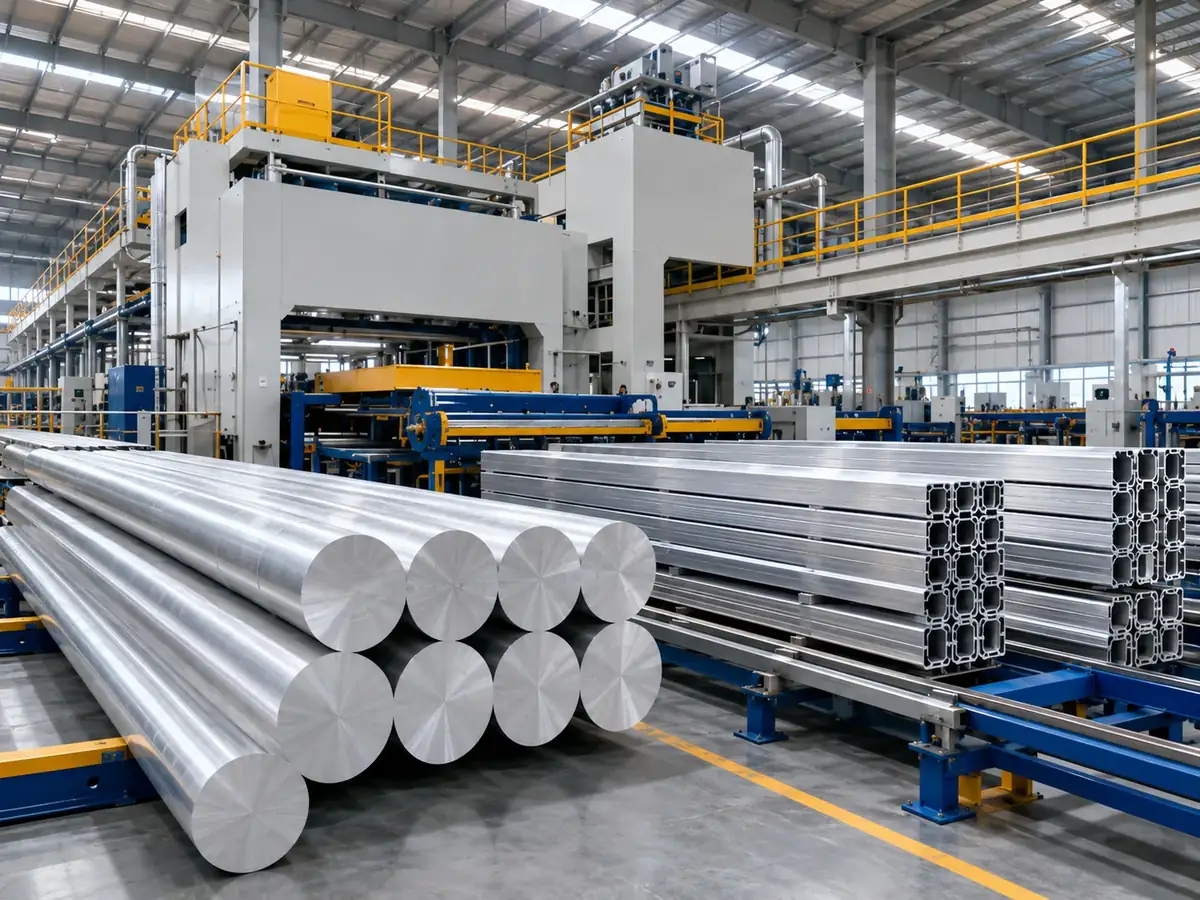
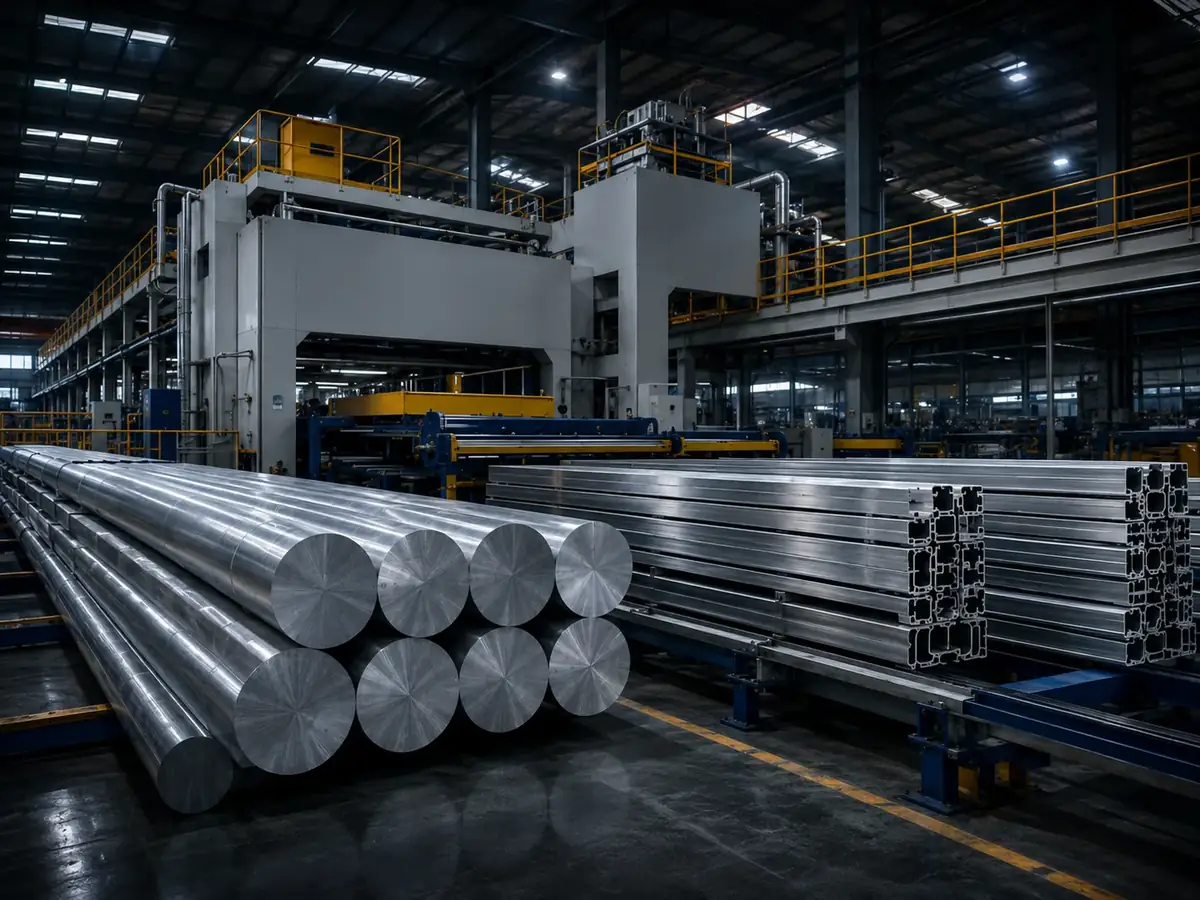
Aluminum bars and extrusions in a major material production facility

Source Management

  • Major material producers and stable supply channels
  • Supplier qualification and delivery capability review
  • Purchasing specifications aligned with drawing requirements
  • Material certificates matched to physical lots
  • Supply deviations and substitute materials require approval

Standards System

  • Chinese National Standards GB / GB/T
  • Japanese Industrial Standards JIS
  • United States Standards ASTM / SAE
  • European Standards EN
  • Customer Corporate Standards & Drawing Specifications CUSTOM

INCOMING MATERIAL INSPECTION WORKFLOW

Incoming Material Inspection Workflow

Incoming inspection follows purchasing requirements and controlled documents. Receipt records, material grade, appearance, dimensions, risk-based material verification and status identification are reviewed before material is released to production.

  1. 01

    Receipt & Document Review

    Match the purchase order, delivery note, material certificate, quantity and lot information, and confirm document completeness.

  2. 02

    Material Grade Verification

    Verify grade, condition, stock size, applicable standard and heat or lot information against drawings, BOMs and purchasing specifications.

  3. 03

    Visual & Packaging Inspection

    Check for surface damage, corrosion, contamination, cracks, distortion, and the condition of packaging and transport protection.

  4. 04

    Dimensional & Tolerance Inspection

    Sample-check thickness, diameter, length, straightness and other critical dimensions and tolerances as required.

  5. 05

    Material & Property Verification

    Review certificate data and perform necessary composition, hardness or property retesting according to customer requirements and material risk.

  6. 06

    Disposition, Identification & Storage

    Assign accepted, pending or rejected status, apply identification, and release material to storage or move it to segregation.

Process Control Points

  1. Inspection Basis & Revision Control

    Use current drawings, BOMs, purchase orders, material specifications and inspection requirements to prevent obsolete revisions from being used.

  2. Sampling Rules & Inspection Frequency

    Define sampling plans, inspection items and frequency according to material risk, lot size, supplier performance and customer requirements.

  3. Nonconforming Material Segregation & Disposition

    Immediately segregate document, identification or material discrepancies, record the issue, and follow the approved return, concession or disposition decision.

Records & Outputs

Inputs
Purchase order, delivery note and material certificate
Inspection Records
Visual, dimensional, material and property results
Status Identification
Accepted, pending confirmation or rejected
Outputs
Incoming inspection report, traceability number and storage status

MATERIAL & BATCH TRACEABILITY

Material & Batch Traceability

A verifiable material traceability chain is maintained by linking the supplier, material certificate, heat or lot number, storage, material issue, production, inspection and finished-product batch records.

  1. 01
    SOURCE VERIFICATION

    Supplier

  2. 02

    Material Certificate

  3. 03

    Heat / Lot Number

  4. 04
    STORAGE & PRODUCTION

    Incoming Stock Label

  5. 05

    Material Issue Record

  6. 06

    Production Work Order

  7. 07
    INSPECTION & DELIVERY

    Inspection Record

  8. 08

    Finished Product Batch

MATERIAL RFQ REQUIREMENTS

Information Required for Material Quotation

Complete material requirements help the engineering team accurately assess sourcing feasibility, substitution risks, inspection requirements, lead time and quotation scope.

Material Grade

Aluminum alloy / stainless steel / copper / engineering plastics

Material Condition

T4 / T6 / T651 / quenched and tempered / annealed / soft / hard

Applicable Standard

GB / JIS / ASTM / EN / customer corporate standard

Stock Form & Size

Bar / plate / tube / extrusion / casting / forging

Quantity & Lead Time

Sample / low volume / production / required delivery schedule

Certification & Traceability

Material certificate / heat-lot data / third-party testing / lot traceability

ENGINEERING FAQ

Common Engineering Questions

Where do you source materials?
Materials are sourced through audited, stable supply channels in accordance with customer drawings, purchasing specifications and designated standards. When a customer specifies a brand, producer or supplier, we evaluate availability, lead time and minimum purchase quantity against those requirements.
Can you provide material certificates and heat-lot information?
Material certificates, supplier lot numbers, heat numbers, incoming labels and related inspection records can be retained according to order and customer requirements. Whether original documents or compiled traceability records must accompany the shipment should be agreed during the RFQ or order stage.
Can GB, JIS, ASTM and EN grades be substituted directly?
No. Similar designations alone are not sufficient for substitution. Chemical composition, mechanical properties, supply condition, dimensional range and product form must be checked together, and the substitute may be used only after drawing and application requirements are confirmed.
How do you proceed when the material condition is not specified?
The material condition should not be assumed. Requirements such as aluminum T4, T6 or T651, annealed or quenched-and-tempered steel, and soft or hard copper should be confirmed before purchasing because condition affects strength, residual stress, machining distortion and finishing results.
Do you support material retesting and third-party testing?
Internal testing or third-party retesting can be arranged according to customer requirements, material risk and project classification. Test items, sampling method, acceptance criteria, report format and cost should be defined during quotation.
Can customers specify a material brand or supplier?
Yes. We evaluate supply feasibility against the specified brand, supplier, standard, purchasing quantity and lead time. If minimum order quantities, extended lead times or discontinuation risks apply, an alternative is proposed for customer approval before purchasing.
Contact Us