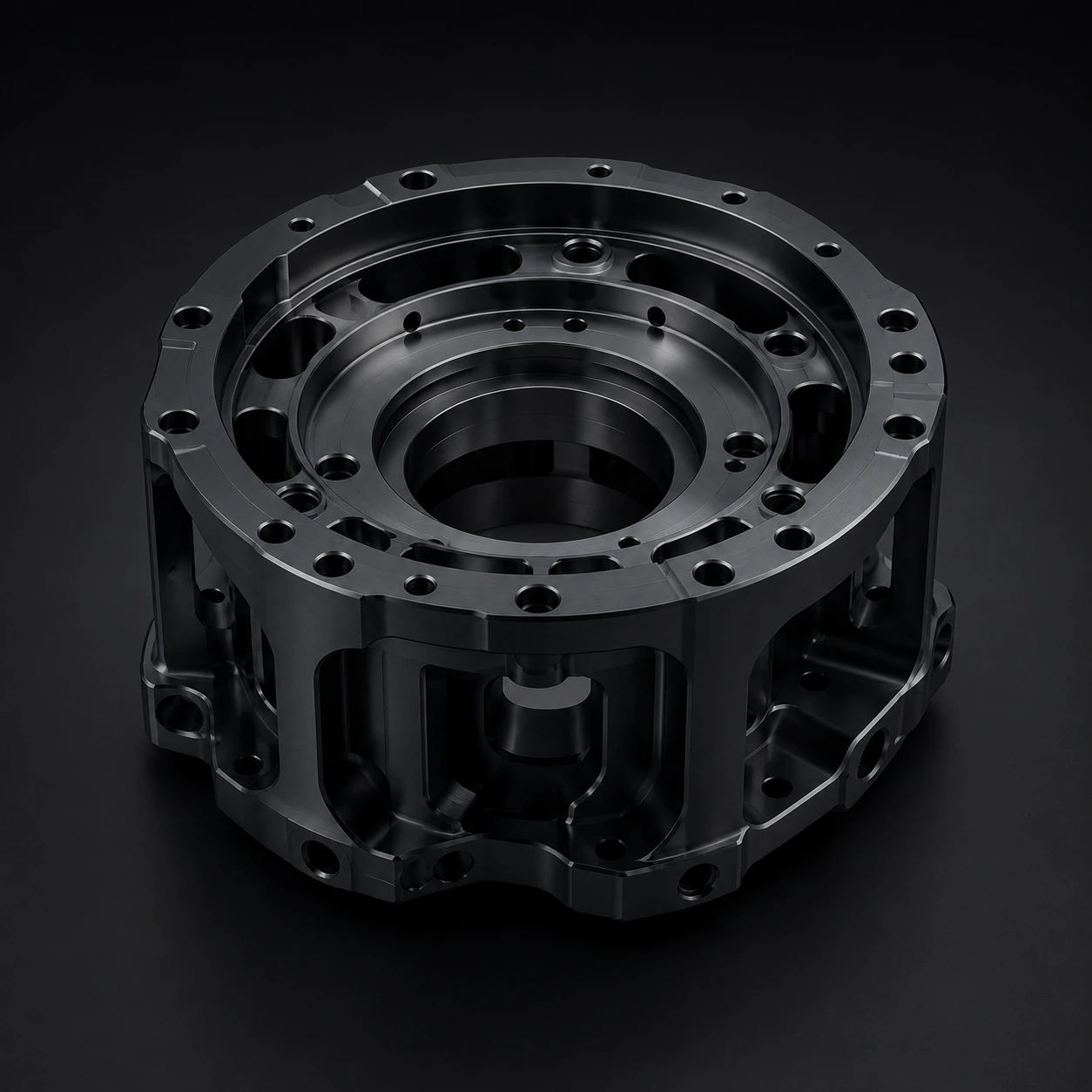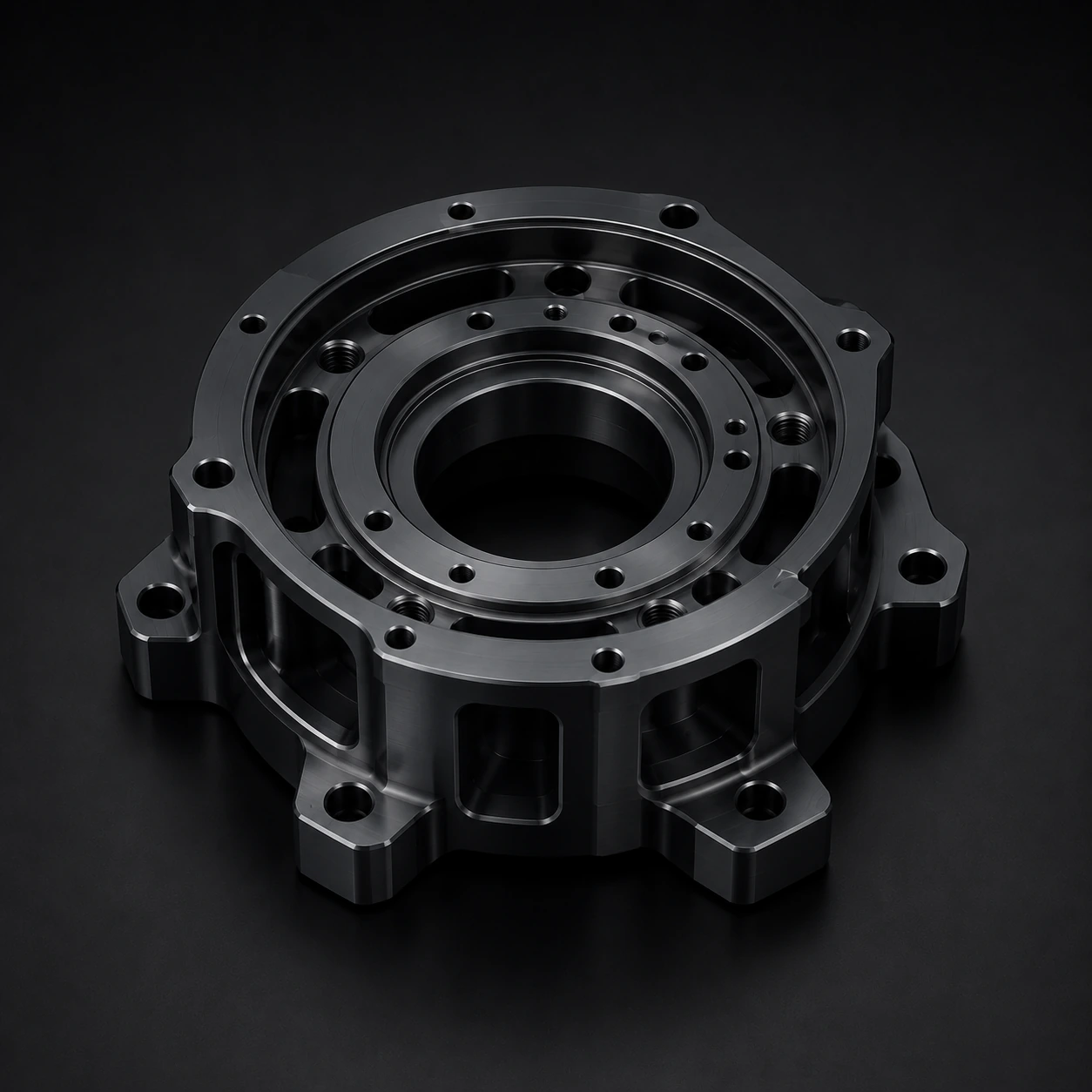
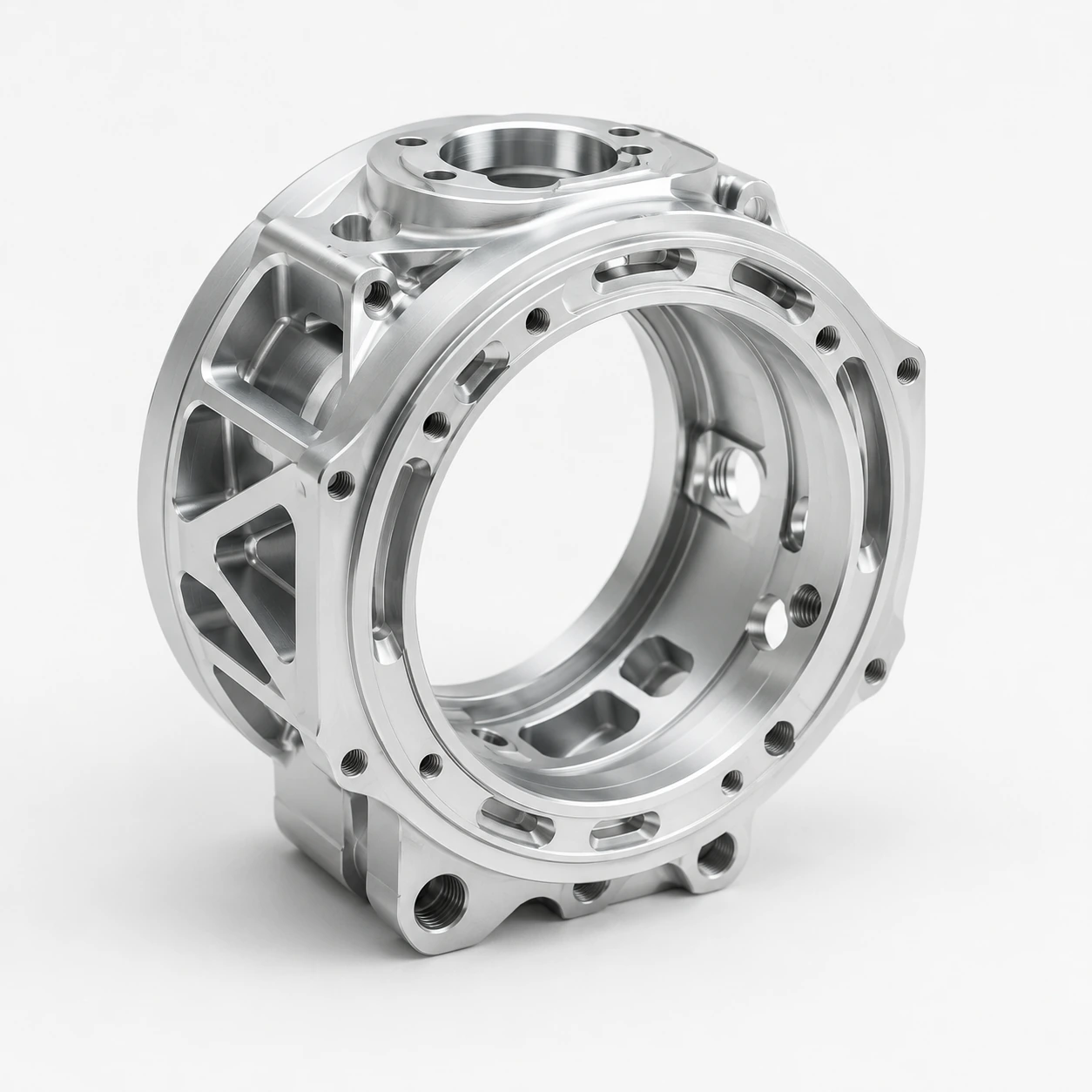
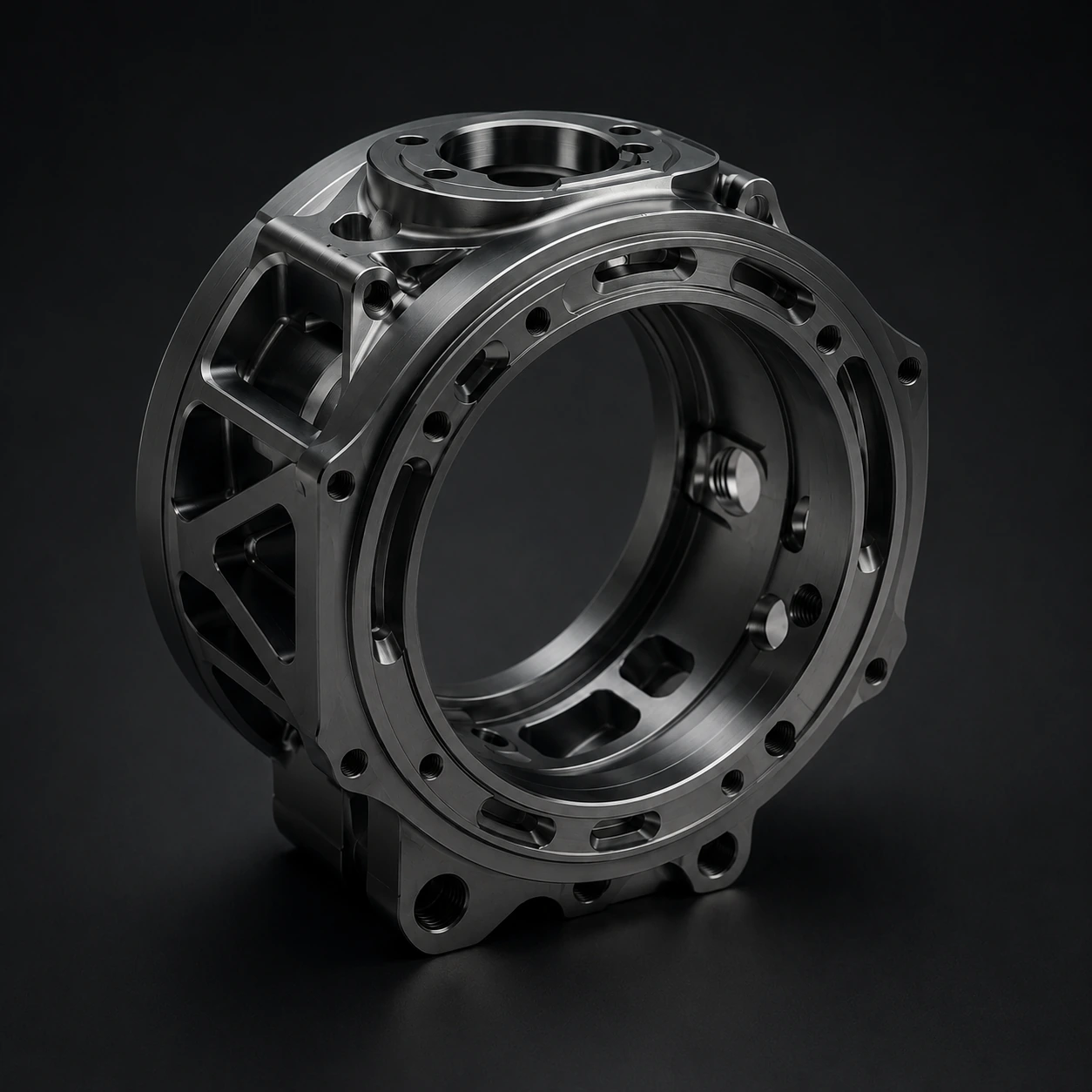
Lightweight Joint Actuator Housing
7075 Aluminum Thin wall · hollow · multi-cavity
HUMANOID ROBOT JOINT MACHINING
Precision machining for humanoid robot joint modules, actuator structures, reducer interfaces, bearing seats, flanges, end covers, connector bases and lightweight structural components.
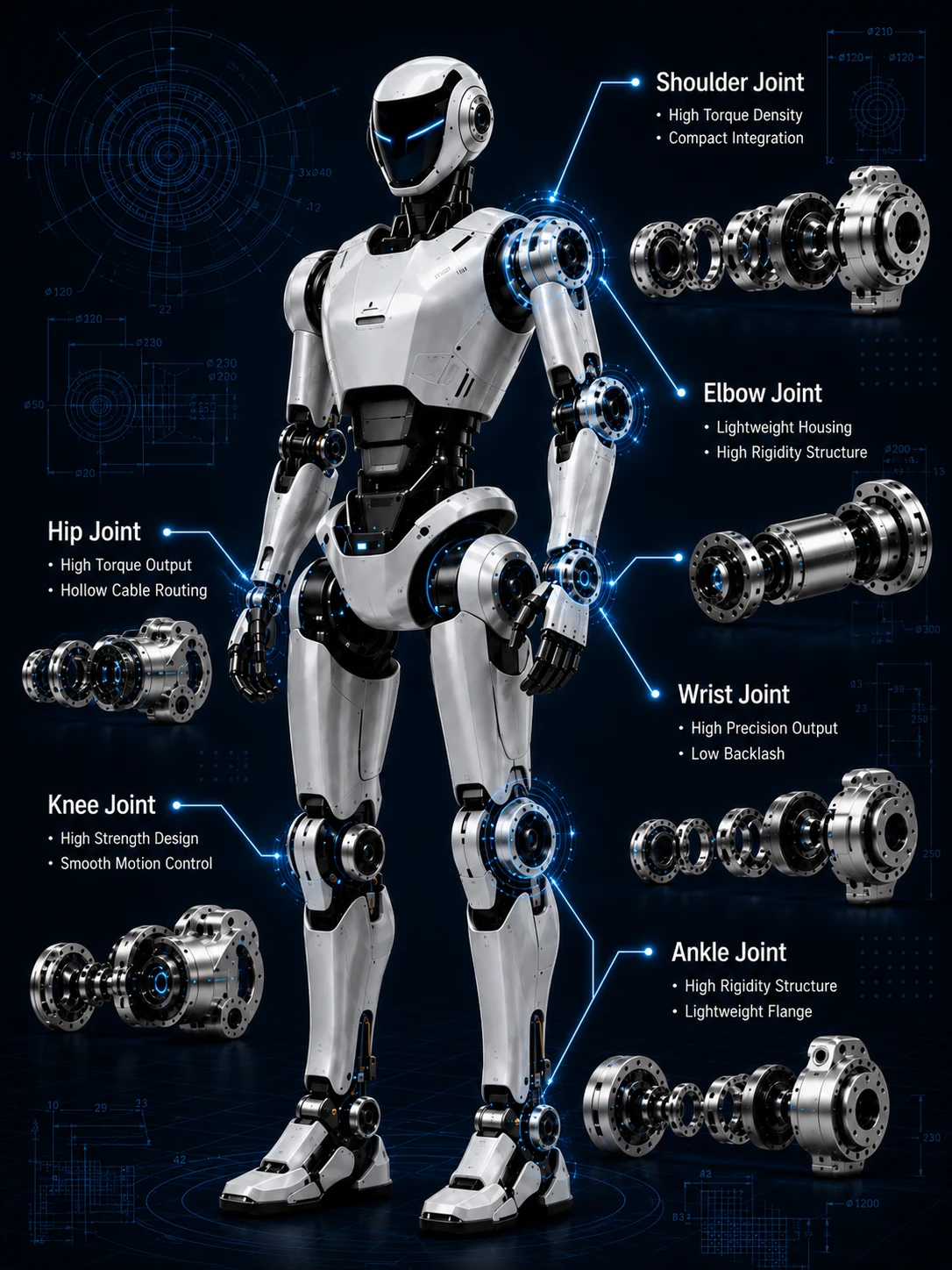
High precision · Consistency
Complex geometry · Efficiency
Single setup · High accuracy
Precision finishing · Clean delivery
Anodizing · Blasting and more
Dimensional inspection · Validation
ROBOT JOINT BASICS
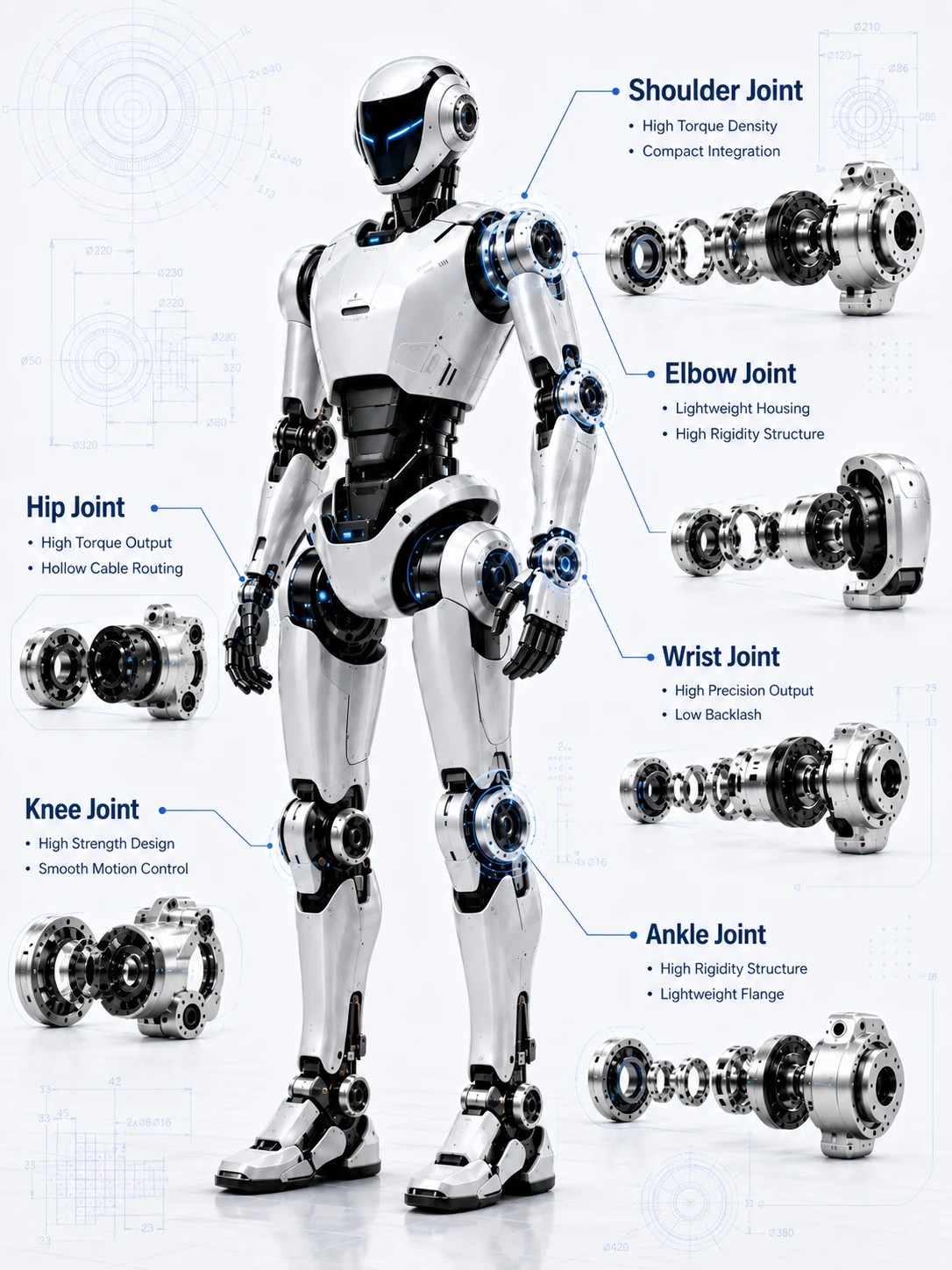
Humanoid robot joint parts are core structural components used in joint modules, actuators and reducer systems. They provide support, transmission, positioning and connection functions, directly affecting rigidity, coaxiality, service life and reliability.
These parts must balance lightweight design, compact dimensions and high integration. Typical structures include thin-wall housings, lightweight flanges, bearing fits, hollow cable-routing structures, end covers and connector bases. Precision CNC machining is critical for multi-face features, coaxial datums and complex assembly relationships.
MACHINING SCOPE
Lightweight precision structural parts for humanoid robot actuators and joint systems, including 7075 aluminum, titanium alloys and carbon-fiber composite structures.
7075 Aluminum Thin wall · hollow · multi-cavity
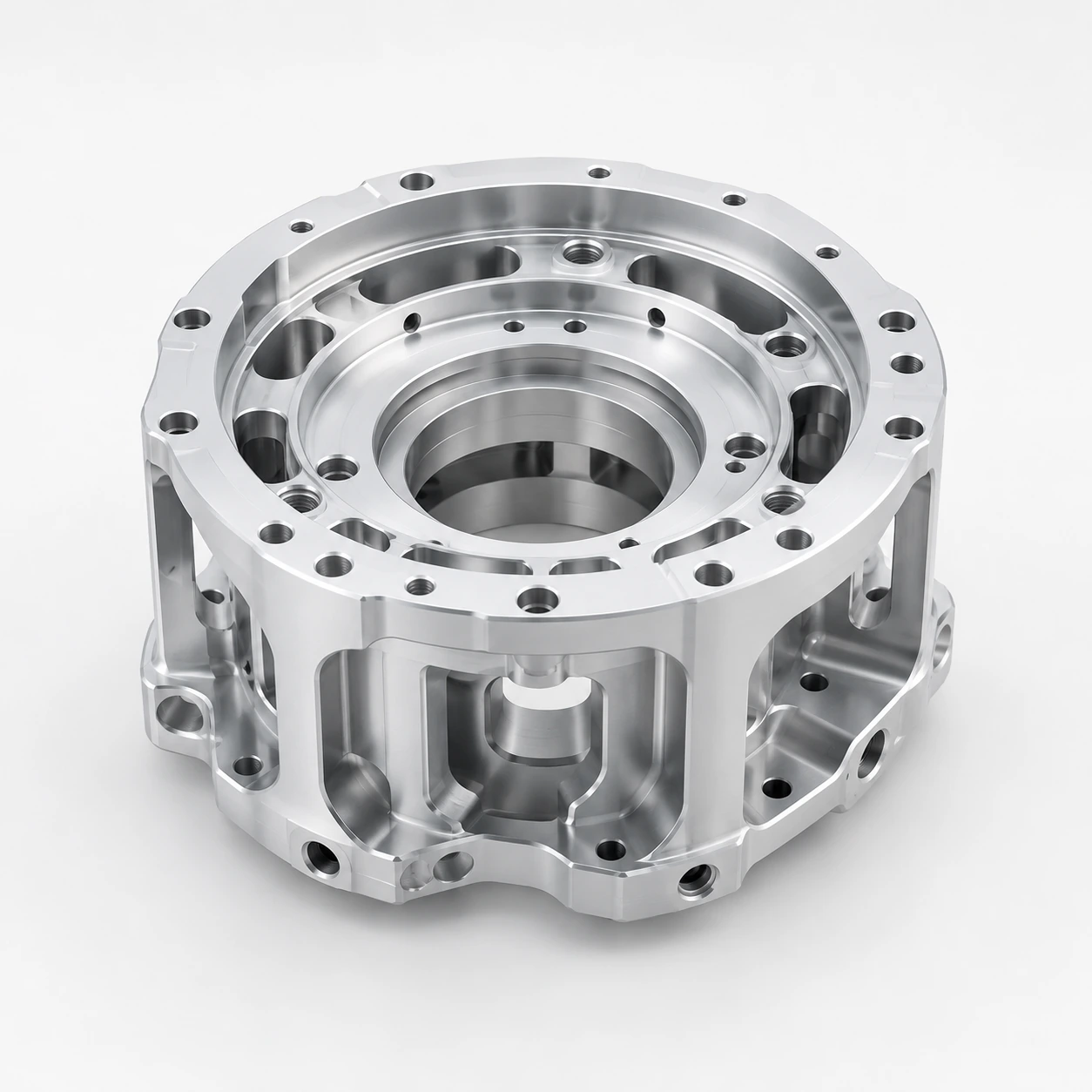
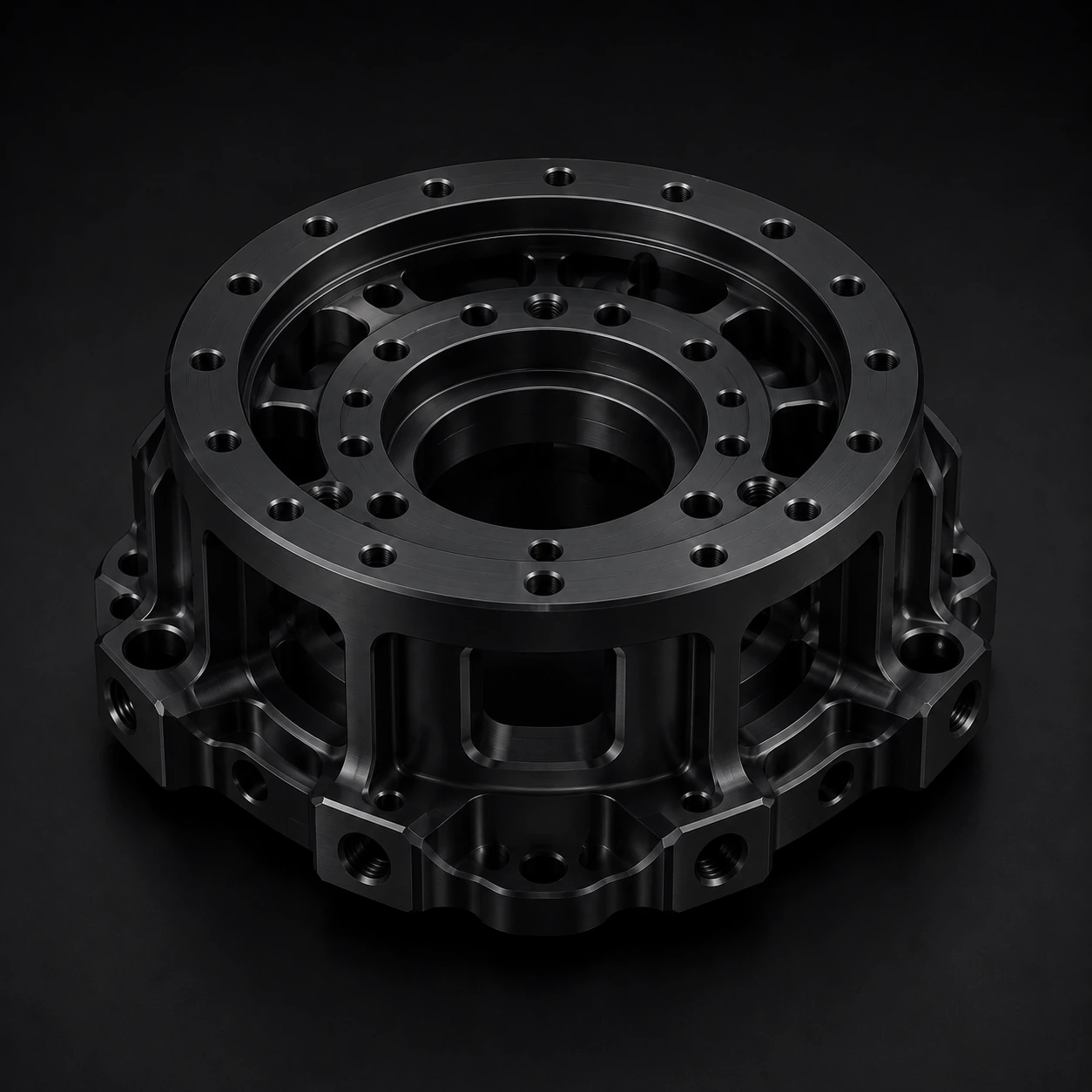
7075 Aluminum Bearing seats · coaxial bores
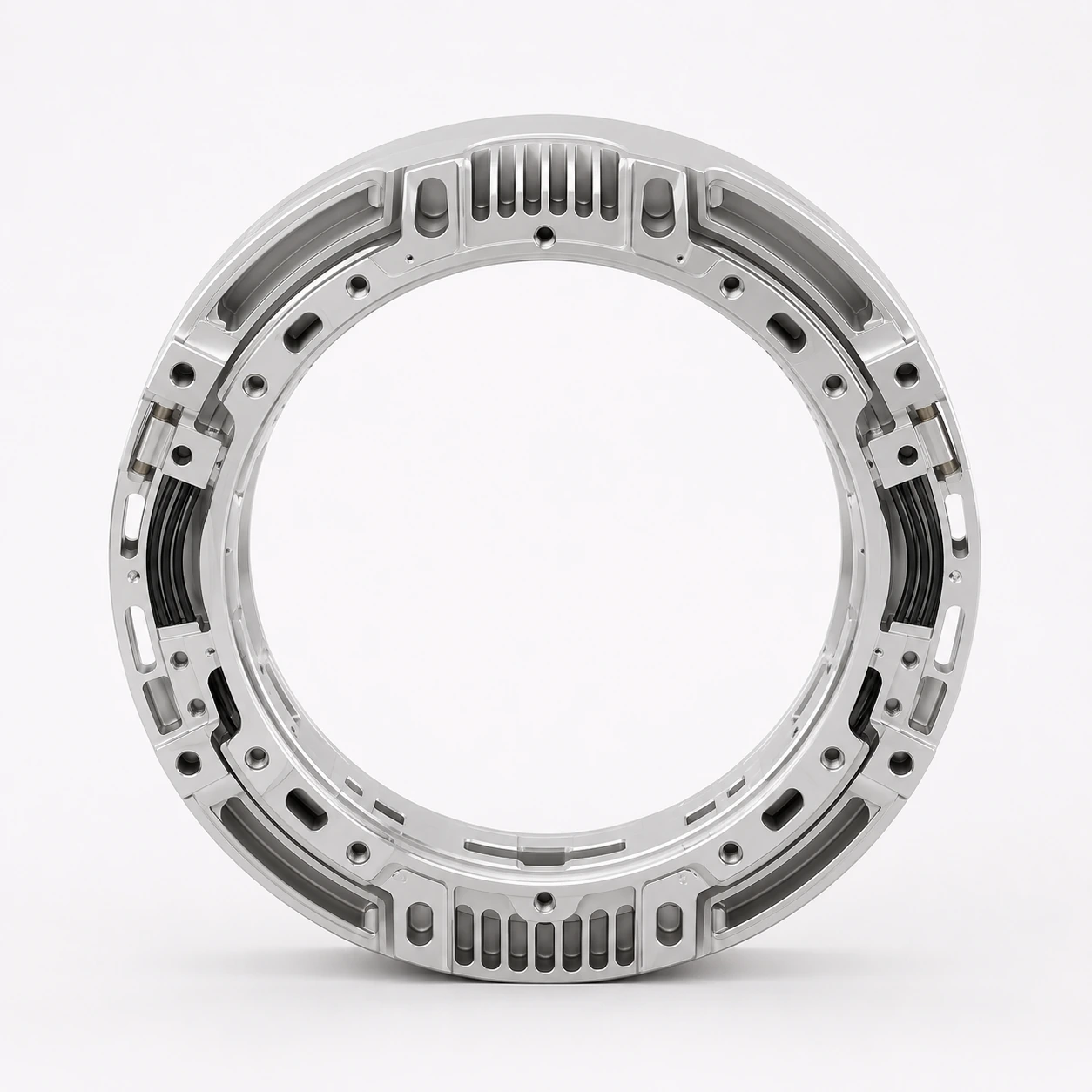
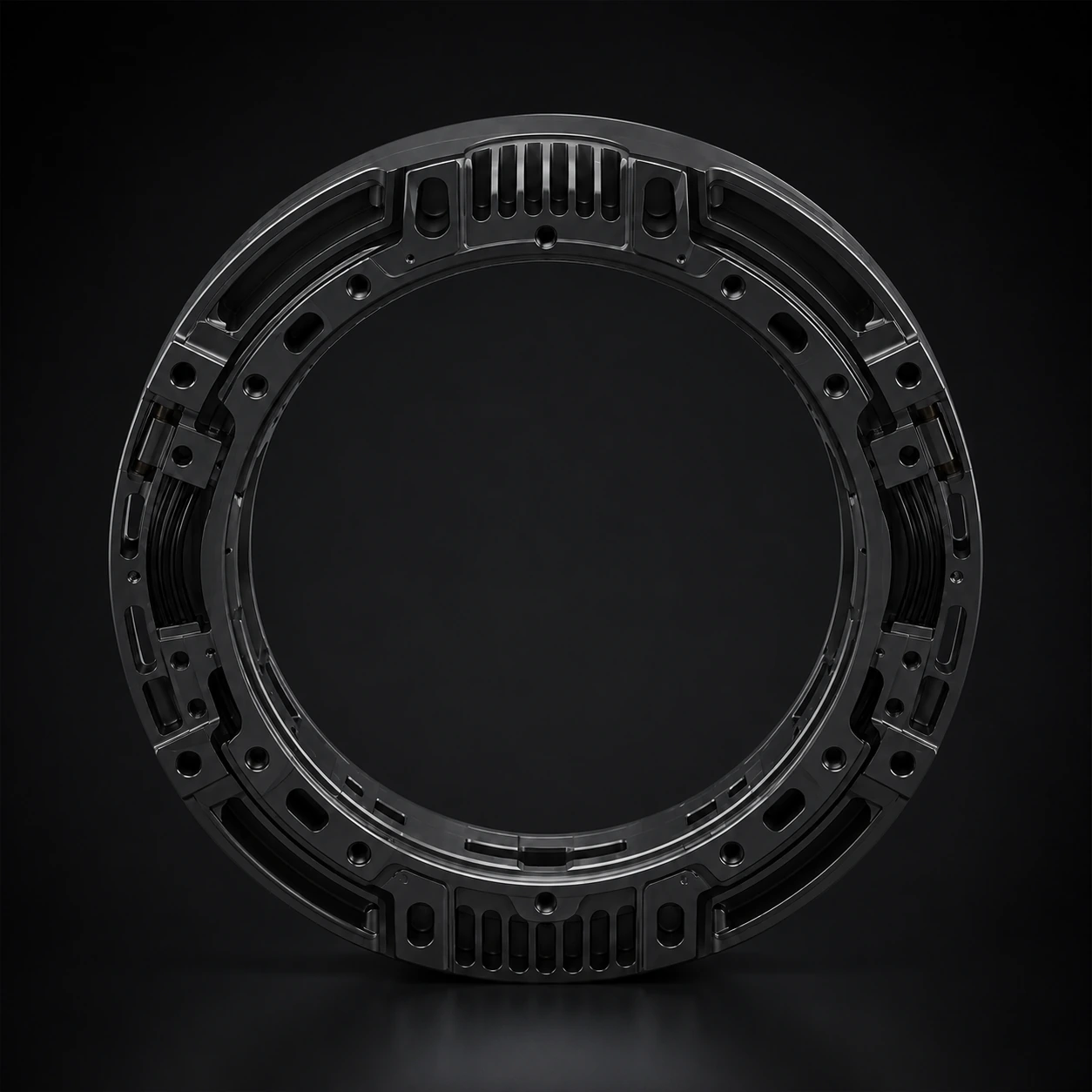
Aluminum Alloy Compact · thin-wall ring
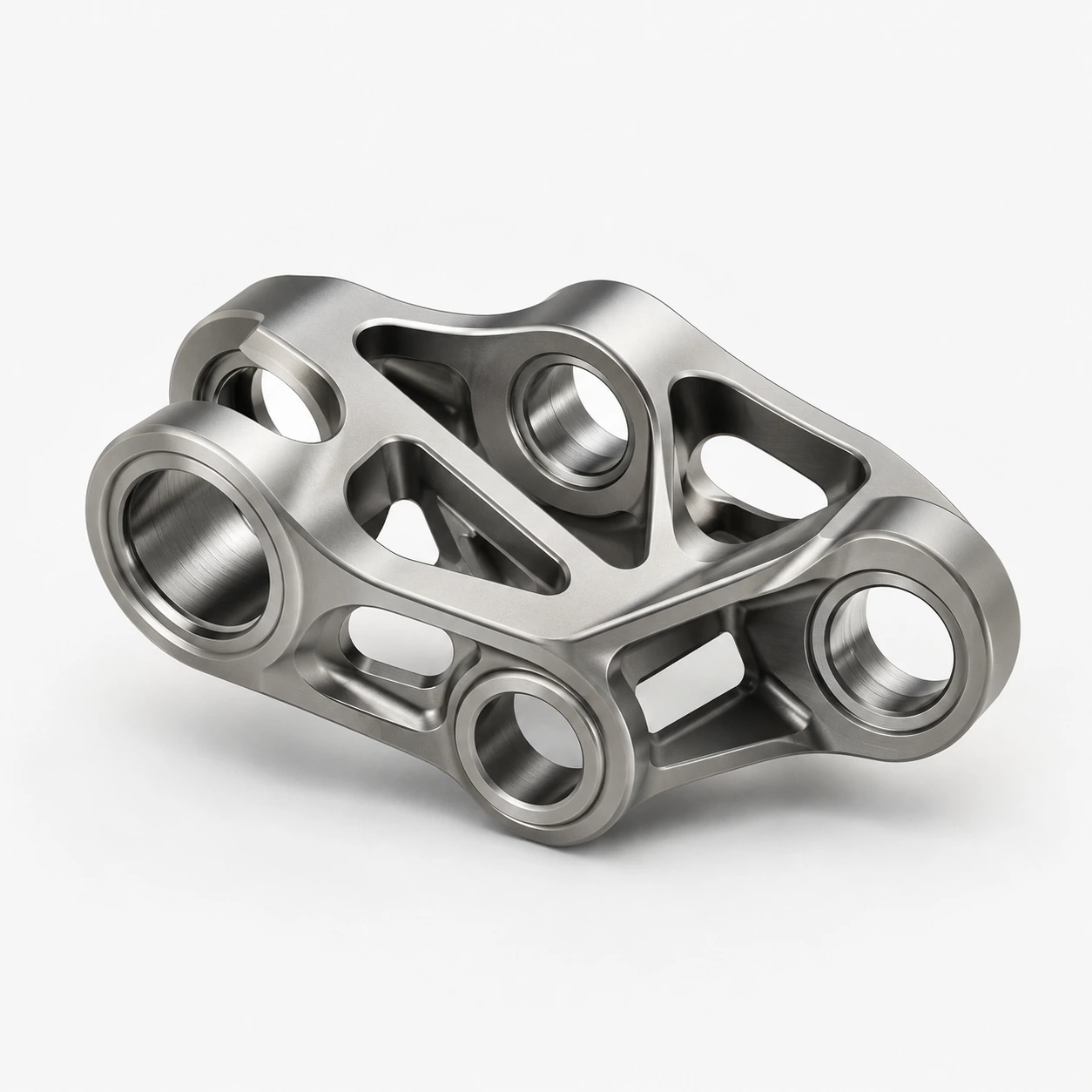
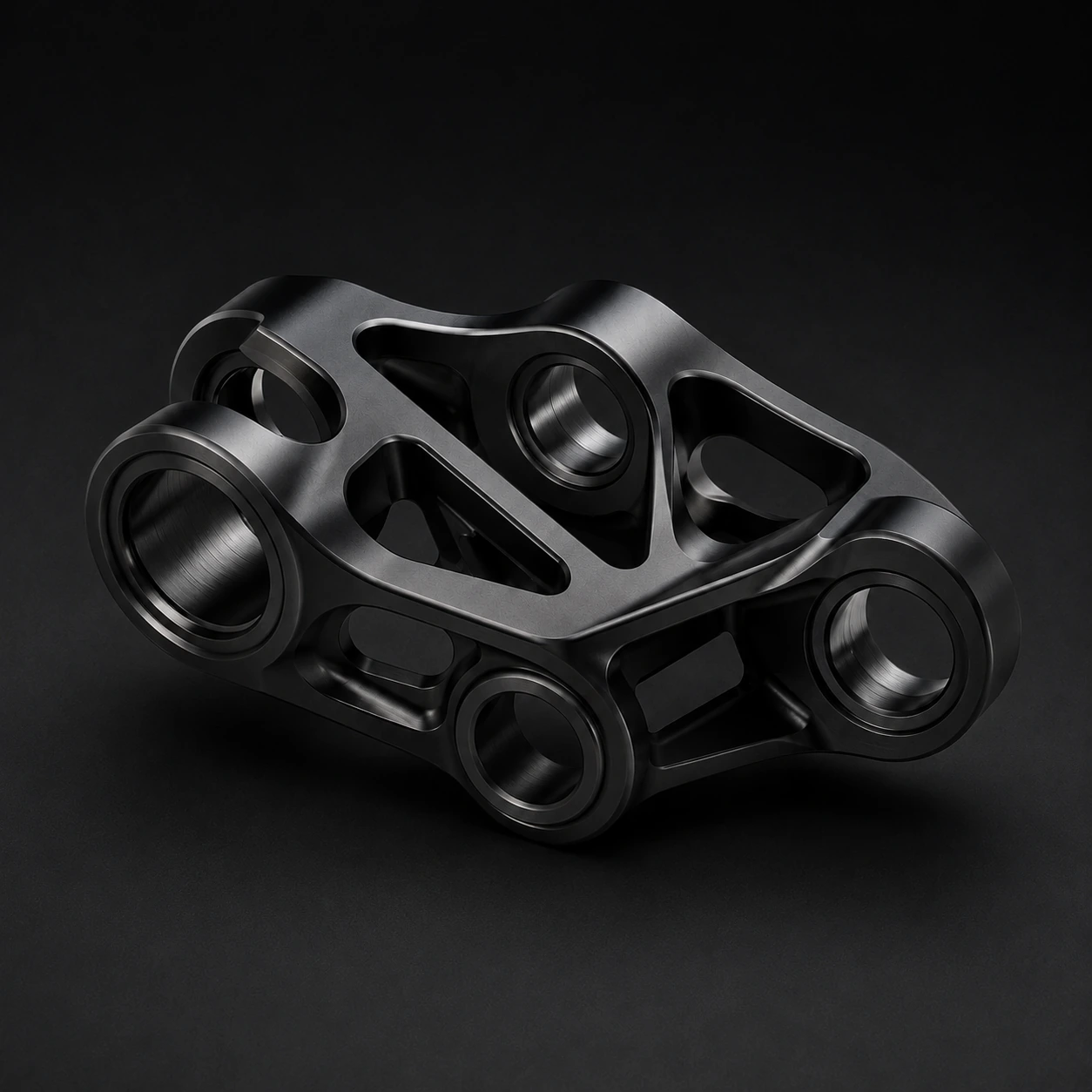
Ti-6Al-4V High strength-to-weight · complex geometry
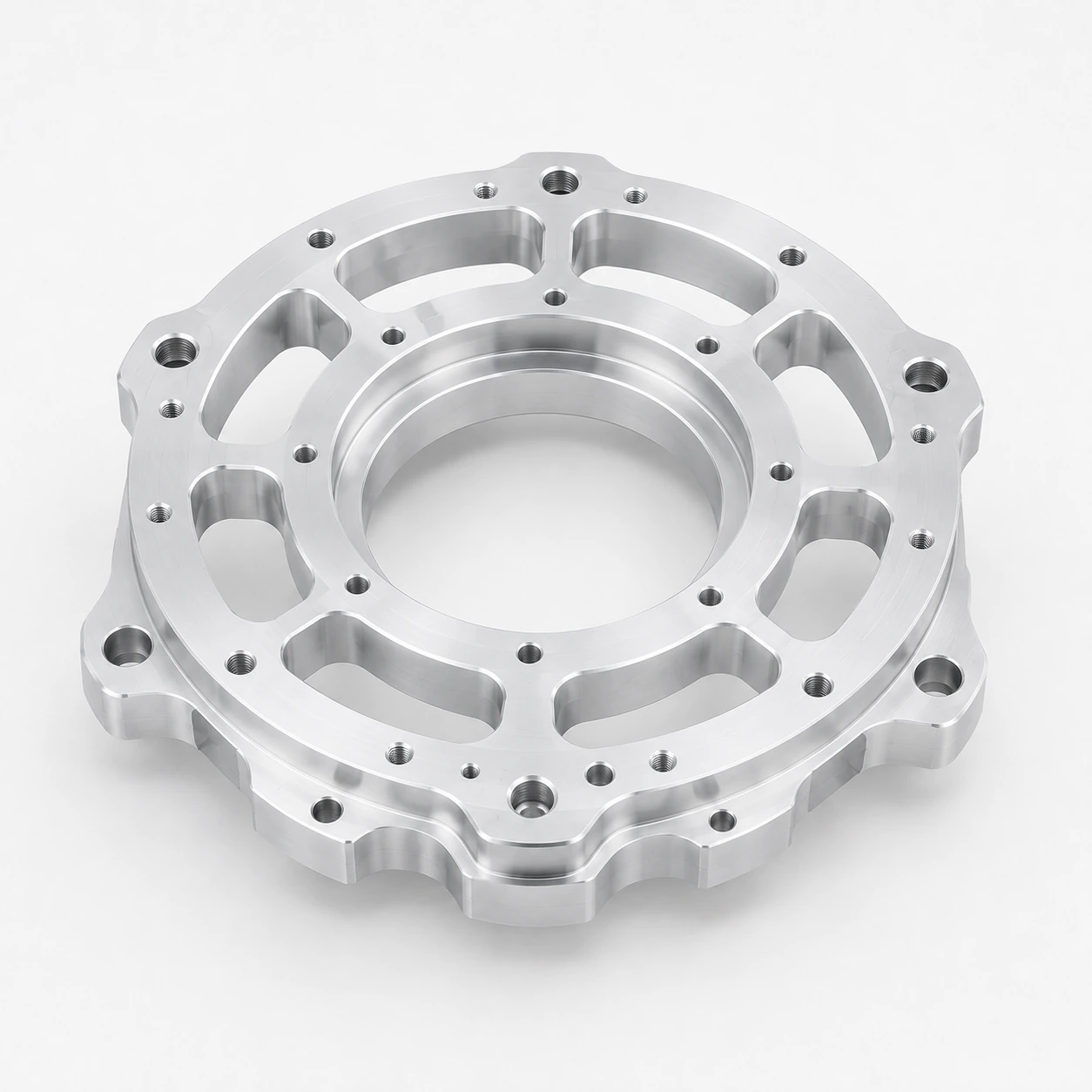
7075 Aluminum Hollowed · precision locating
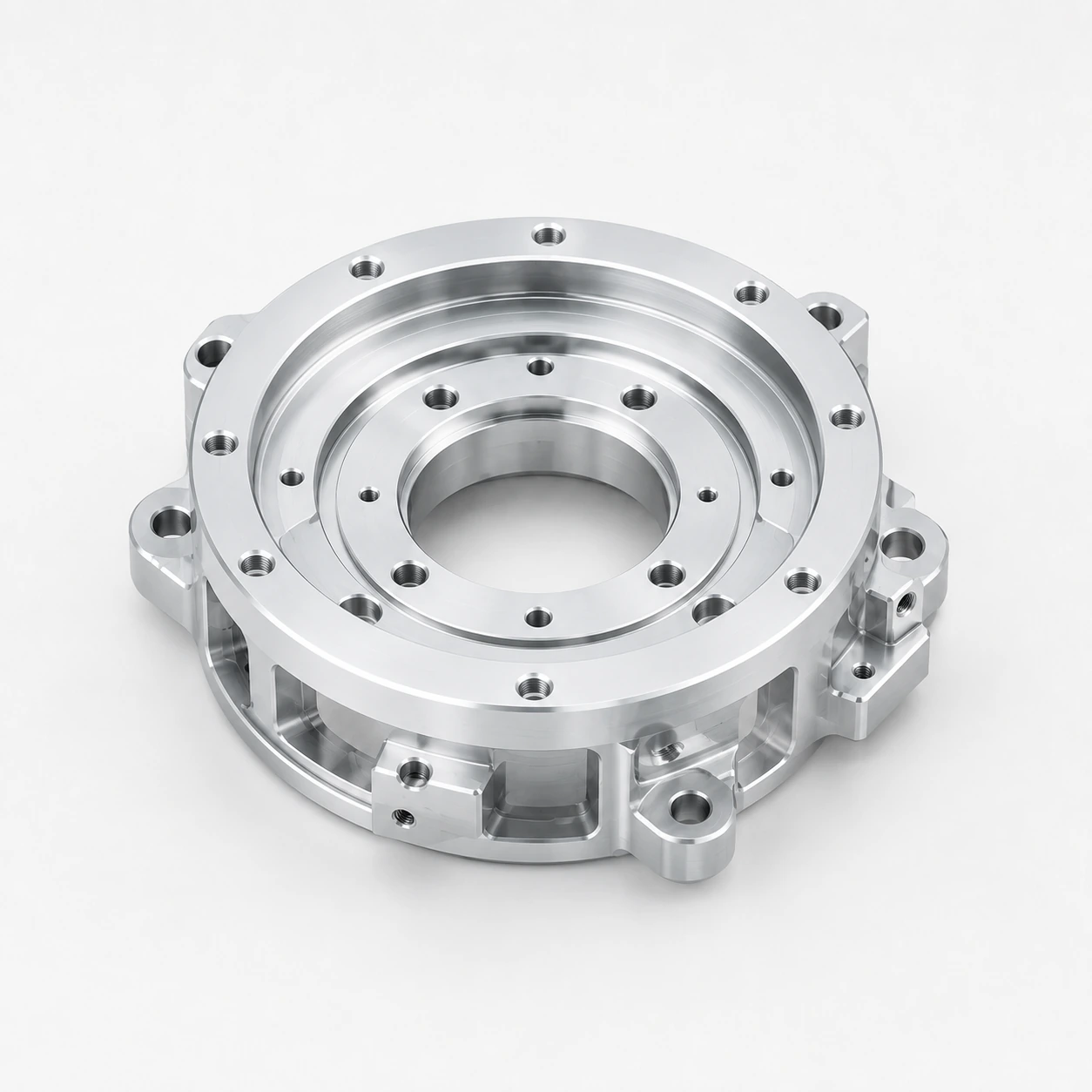
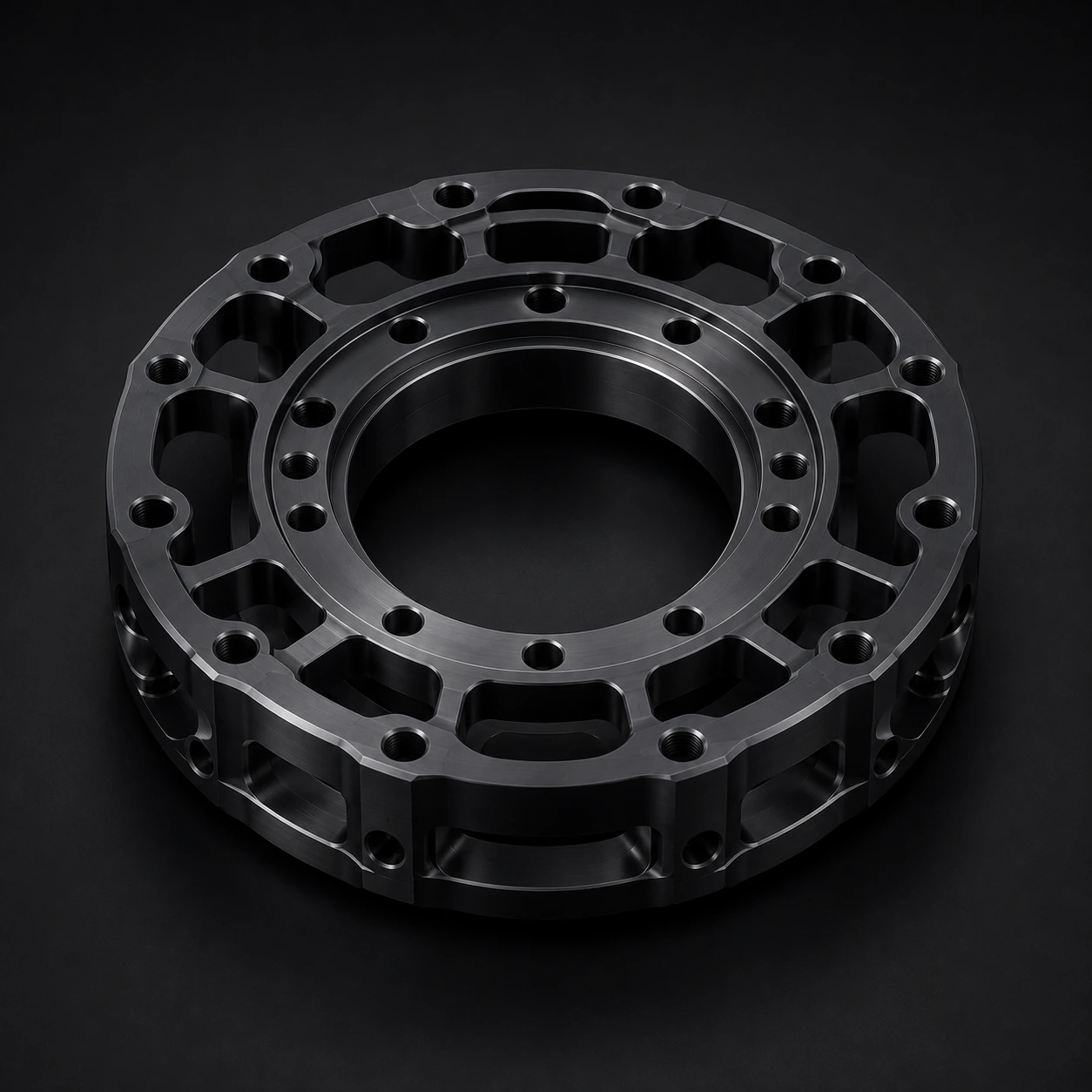
7075 Aluminum Concentric locating · hole pattern
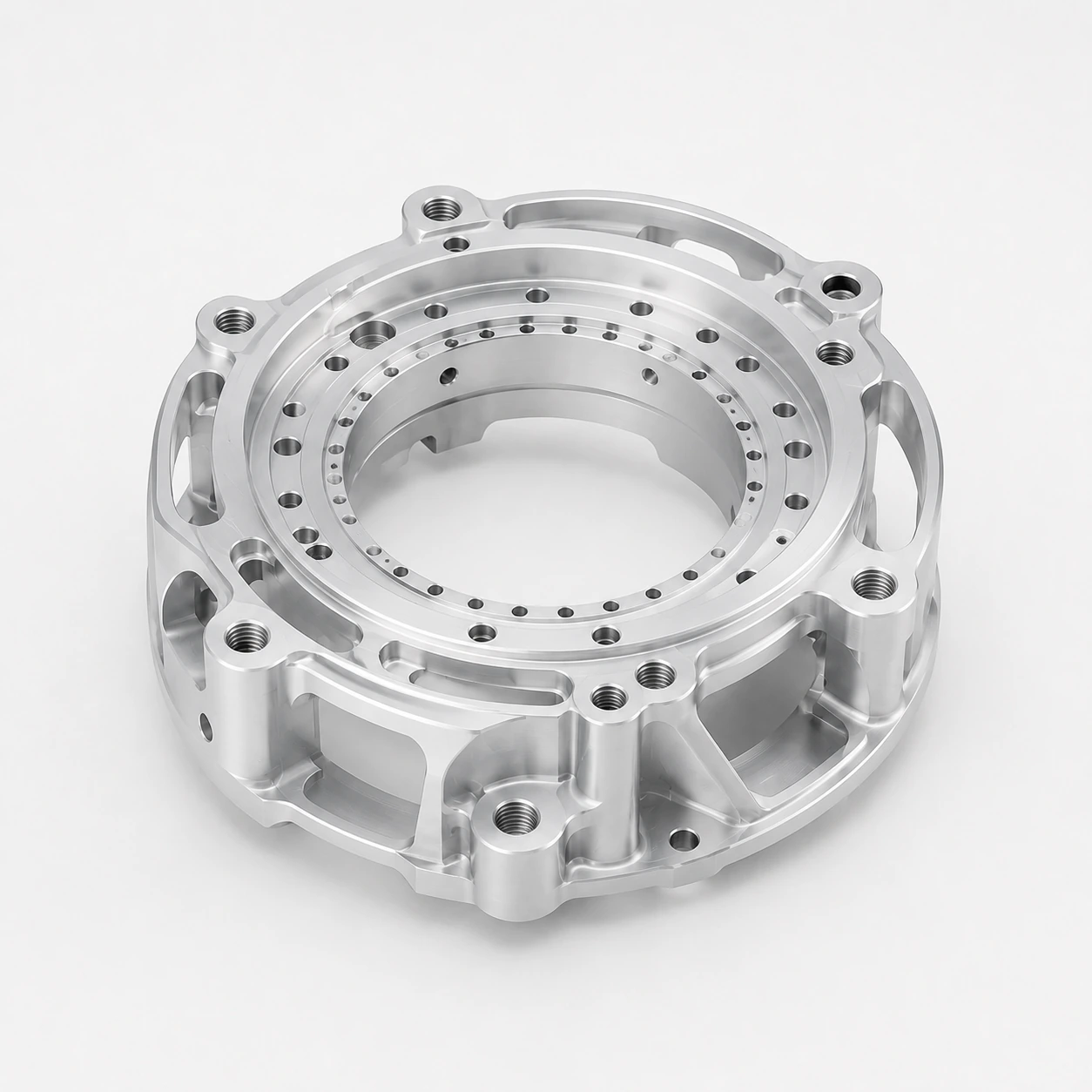
Aluminum / Titanium High rigidity · precision interface
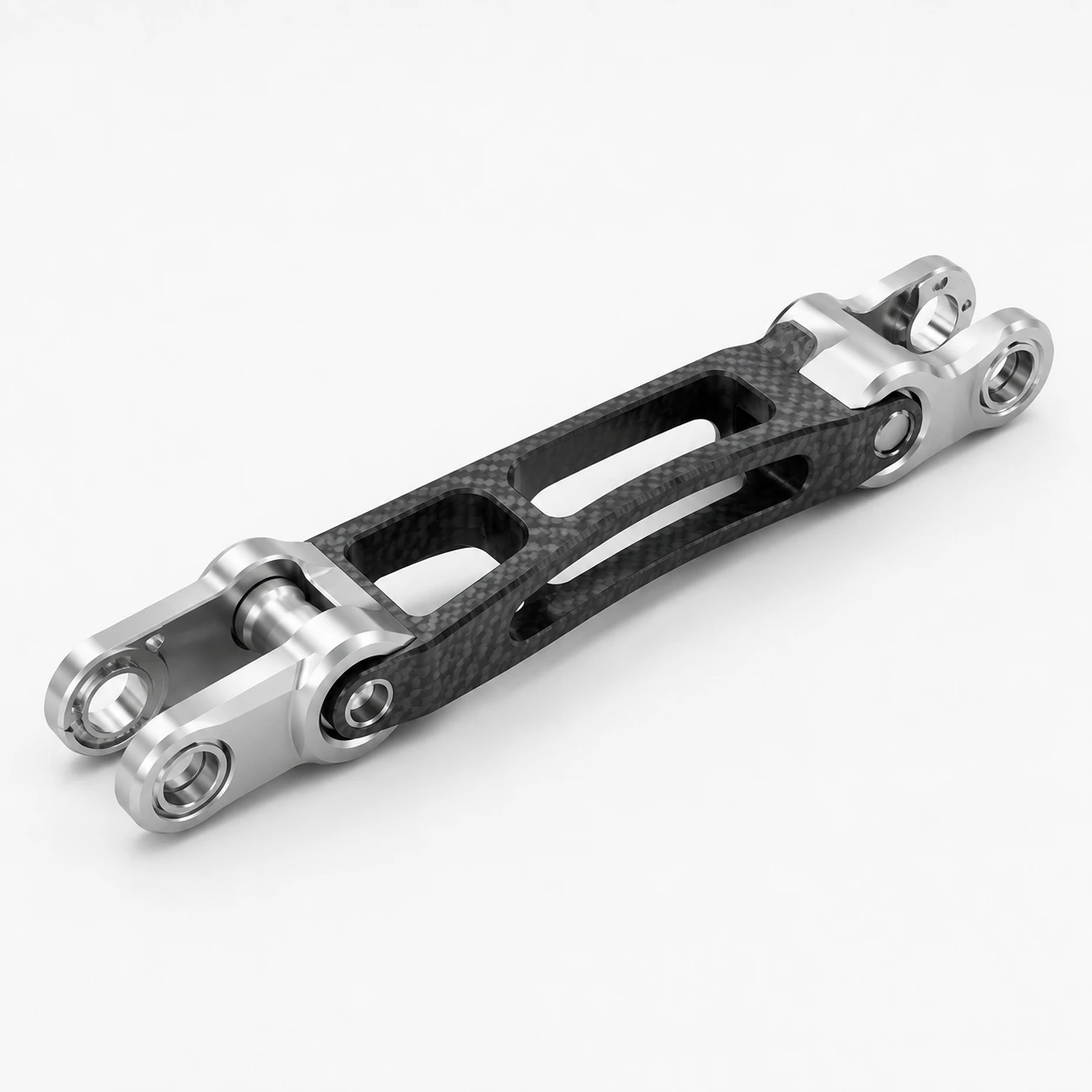
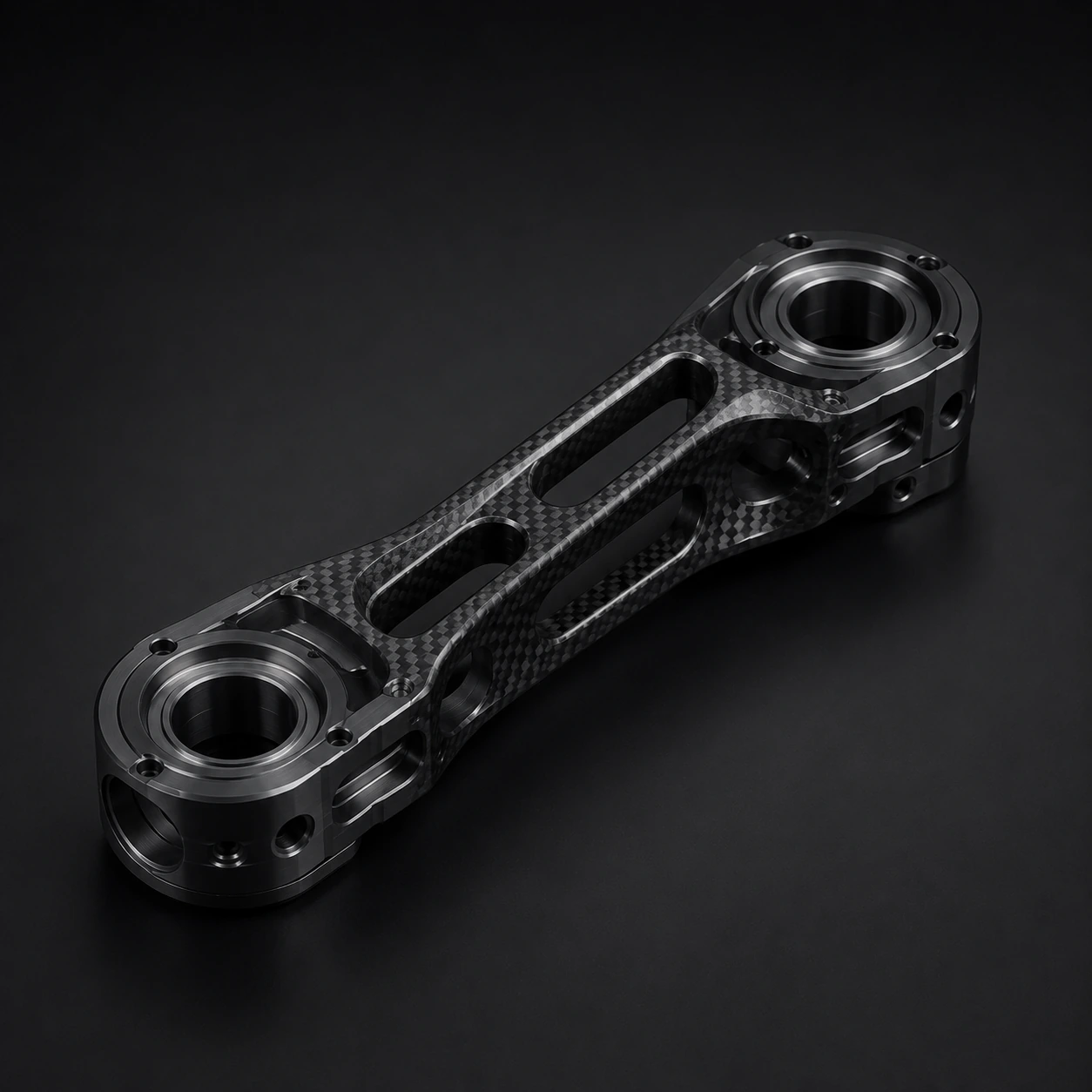
CFRP + Metal Inserts Composite structure · lightweight link
MATERIALS & PRODUCTION
Material and manufacturing routes are selected according to load, moving inertia, rigidity, wear and insulation requirements, then converted into repeatable production processes through machining, finishing, inspection and assembly.
MATERIAL 01
HIGH-STRENGTH ALUMINUM
A key lightweight material for actuator housings, reducer housings, output flanges and precision mounting structures.
PRODUCTION CONTROL
Distortion · Datum control · Post-finish dimensions
MATERIAL 02
HIGH-STRENGTH JOINTS
Suitable for high-load joint connectors, compact high-strength nodes and critical load-bearing structures in limited space.
PRODUCTION CONTROL
Cutting heat · Tool life · Dimensional drift
MATERIAL 03
FUNCTIONAL COMPONENTS
Used for insulation, wear parts, bushings, guides and sensor-adjacent functional structures where lightweight performance is required.
PRODUCTION CONTROL
Thermal deformation · Internal stress · Dimensional stability
MATERIAL 04
COMPOSITE STRUCTURES
Suitable for lightweight robot arms, legs and long links by integrating carbon-fiber bodies with CNC-machined metal interfaces.
PRODUCTION CONTROL
Delamination · Burrs · Interface accuracy · Assembly consistency
FROM PROTOTYPE TO PRODUCTION
Different materials require different machining methods, but stable production depends on one repeatable manufacturing system. Process routes, datums, fixtures, tooling strategies, CTQs and inspection standards are established from the prototype stage, then progressively converted into stable batch production.
Review material, tolerances, datums, thin walls and machining accessibility
Select plate, bar, forging or composite structure by geometry and volume
Validate process route, workholding, tooling and dimensional stability
4-axis / 5-axis machining, critical bores, bearing fits and complex surfaces
Blasting, anodizing, polishing, printing and related finishing
Critical dimensions, coaxiality, position and batch process records
Bearings, pins, inserts, subassembly and batch delivery
ROBOT APPLICATIONS
Our precision machining and multi-material manufacturing capabilities support robot platforms requiring high-precision joints, actuators, lightweight structures and precision interfaces, including humanoids, quadrupeds, industrial logistics and rehabilitation robots.
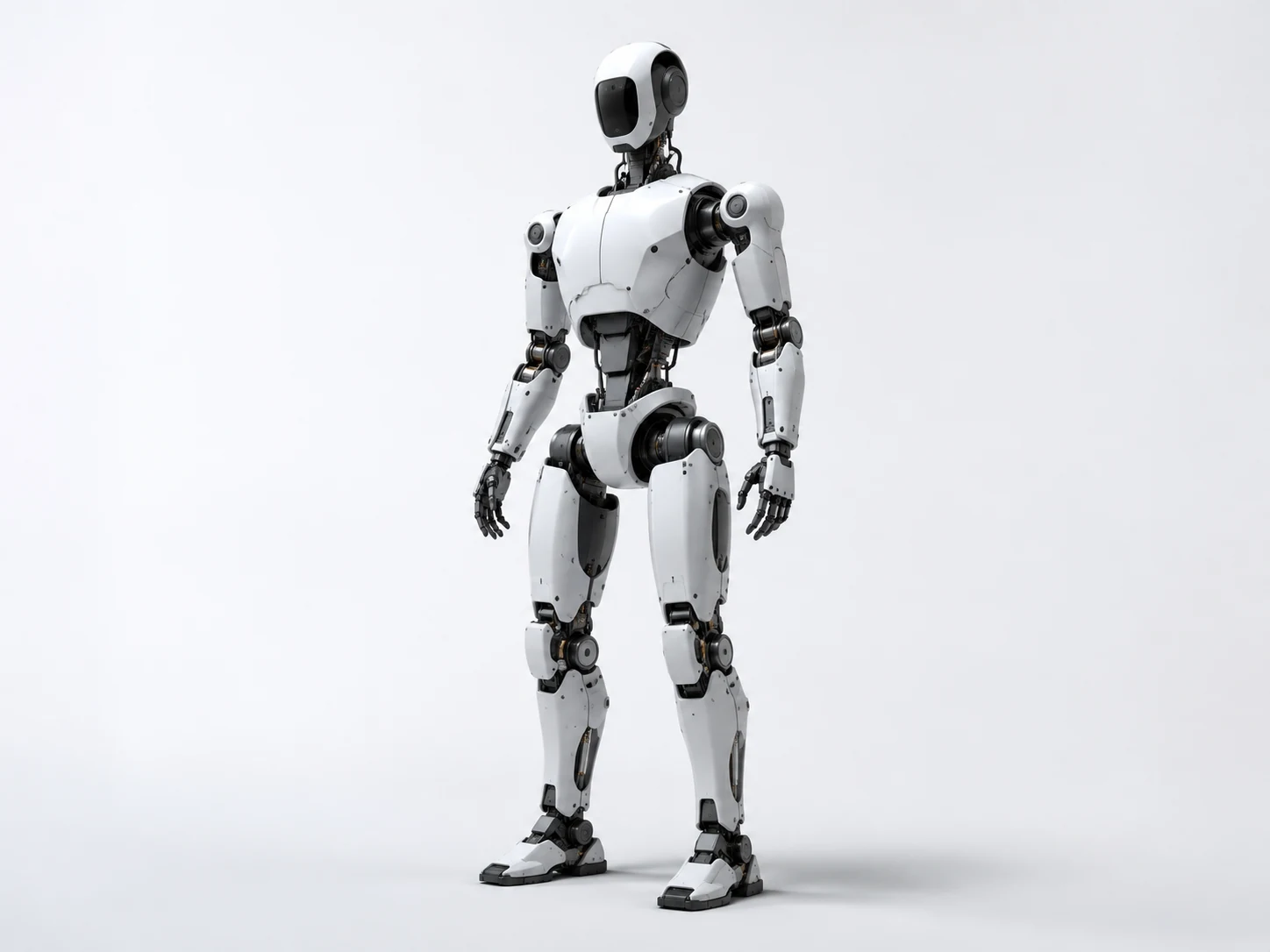
GENERAL-PURPOSE HUMANOIDS
Bipedal motion · Multi-DOF joints · General manipulation
General-purpose humanoids require compact actuators, lightweight structures and precision multi-material components for complex movement and manipulation.
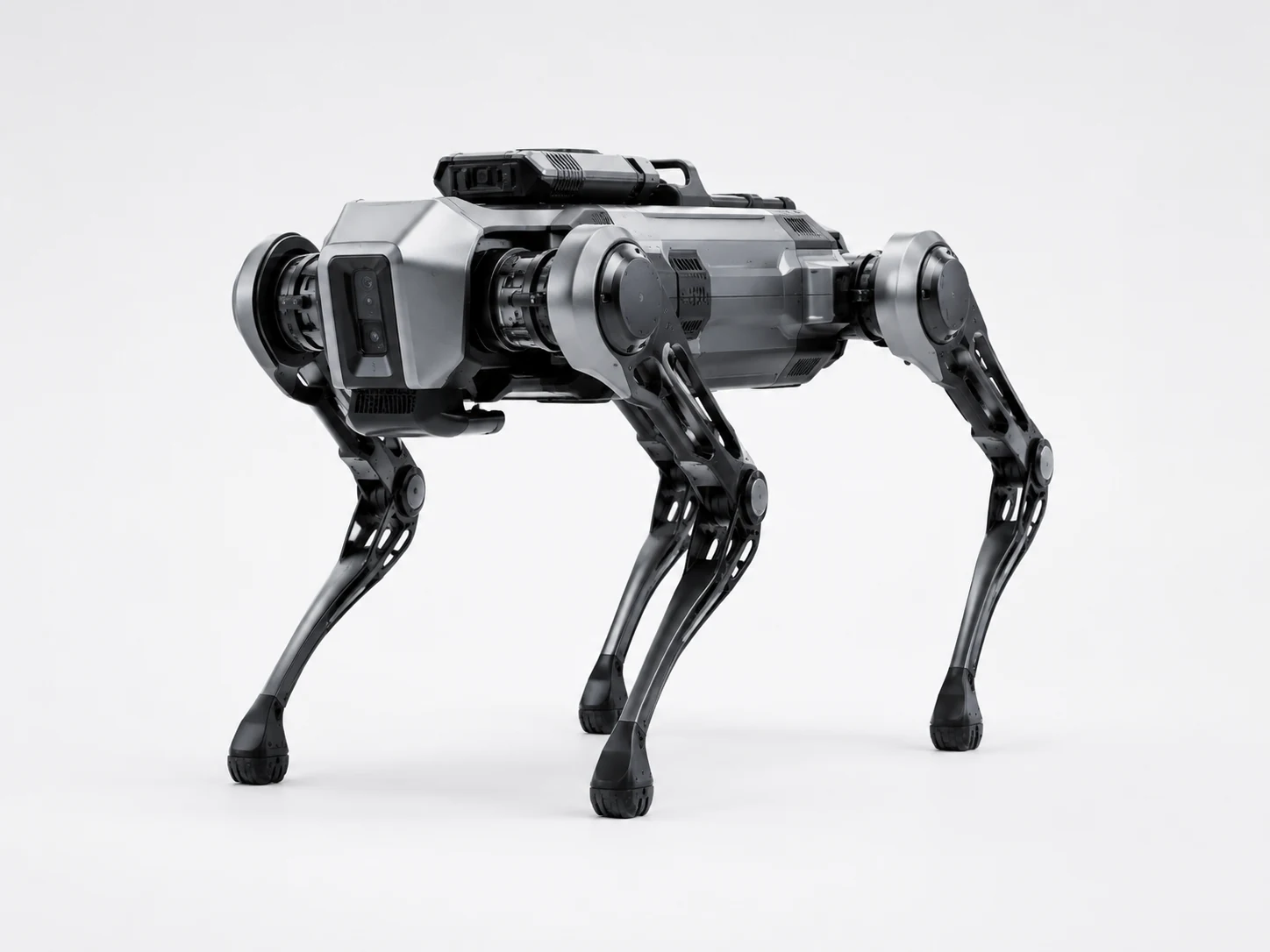
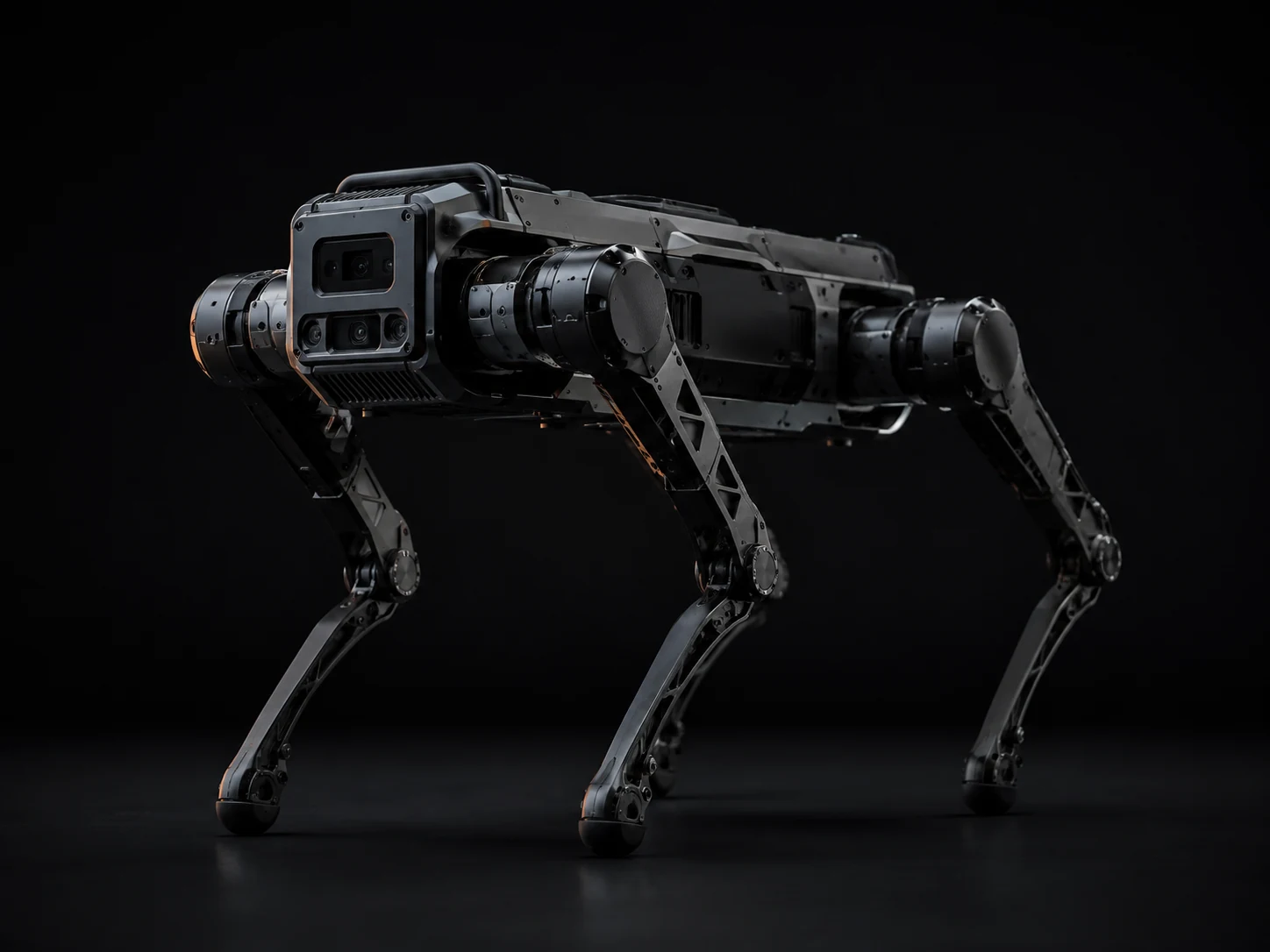
QUADRUPED ROBOTS
Inspection · Rescue · Outdoor operations
High-dynamic quadruped platforms require lightweight leg structures, compact joint actuators and high-strength connection components.
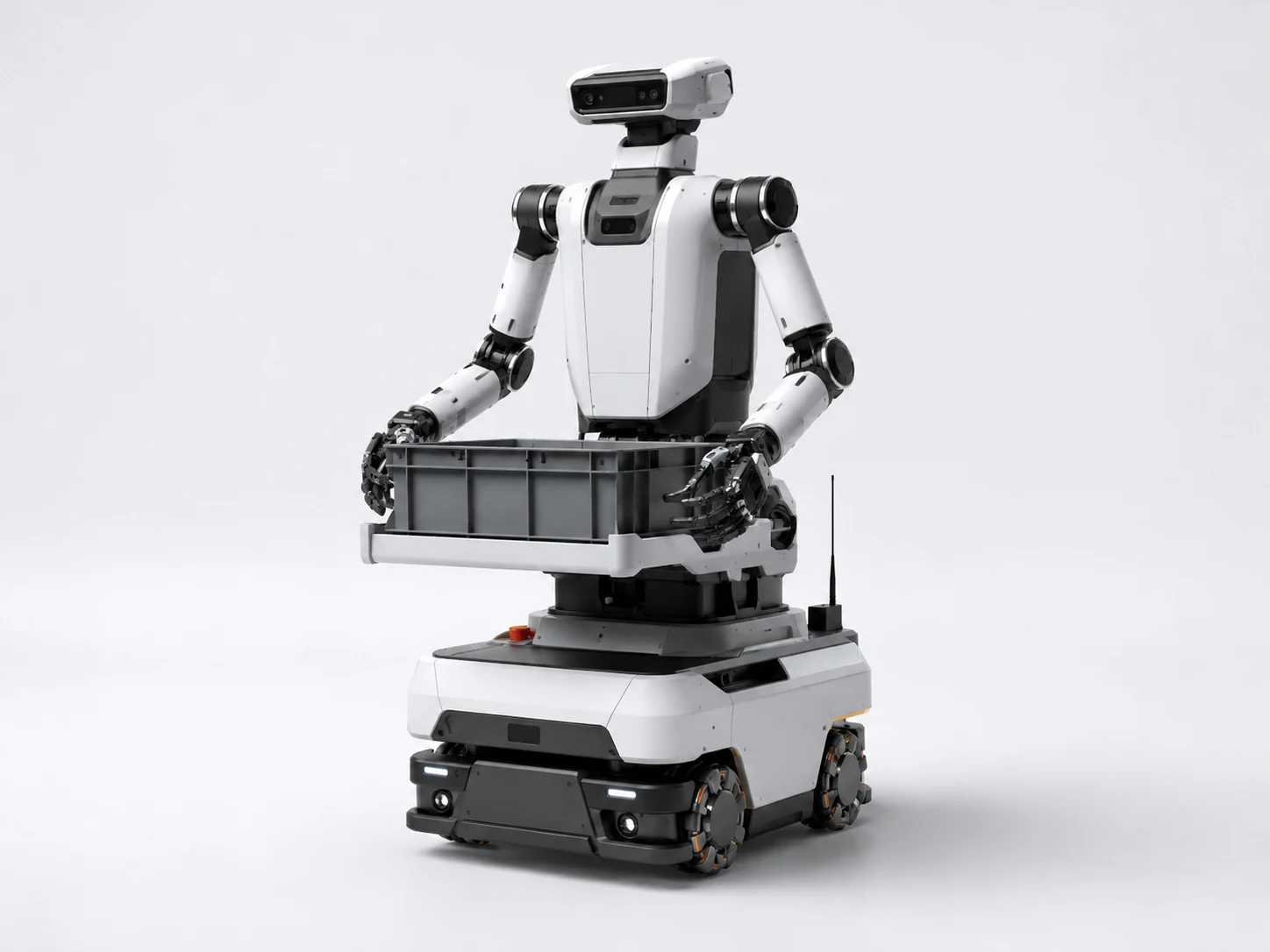
INDUSTRIAL & LOGISTICS ROBOTS
Material handling · Warehousing · Factory automation
Mobile manipulation and flexible automation systems require repeatable production of robotic arms, actuators and structural components.
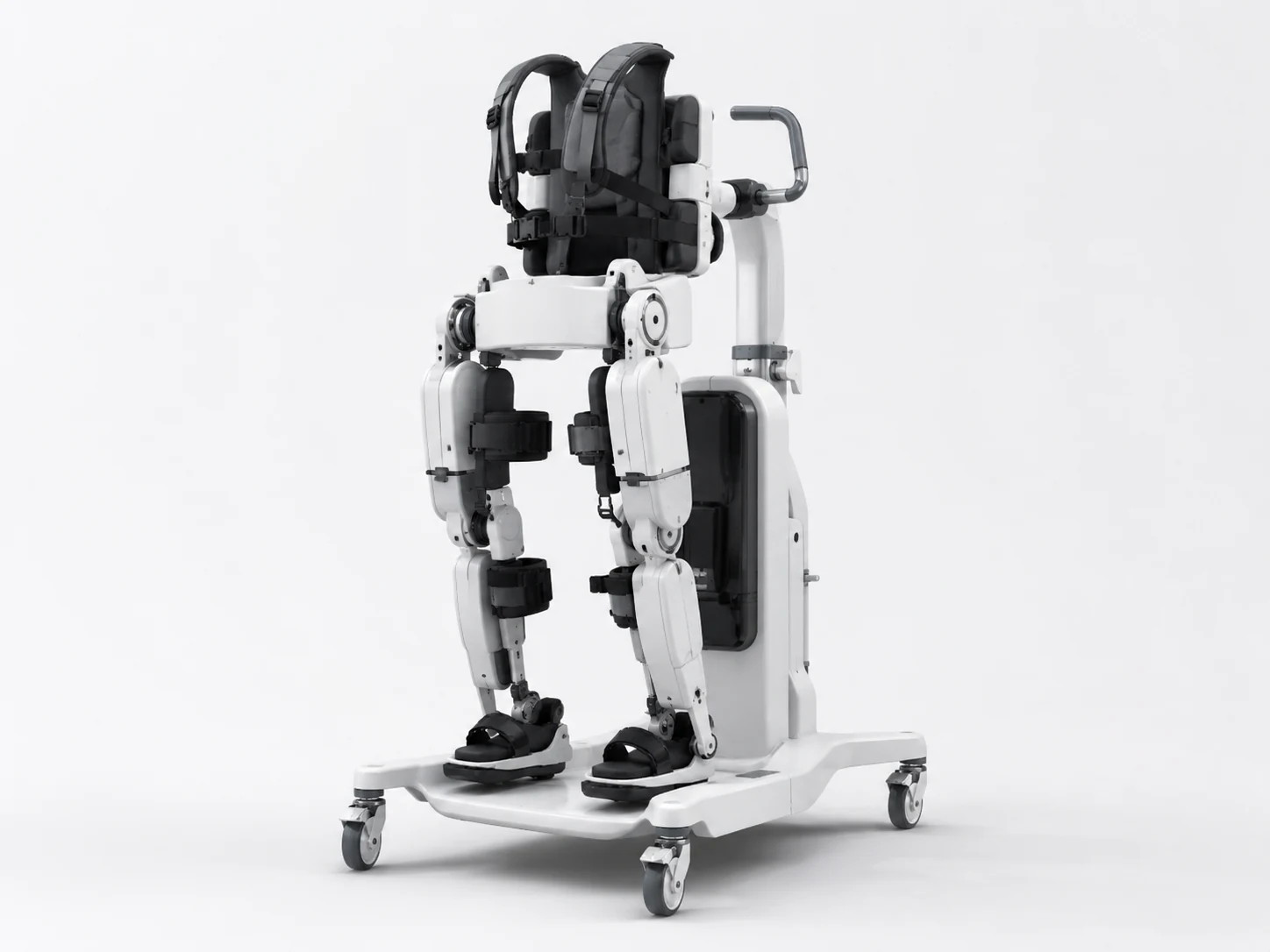
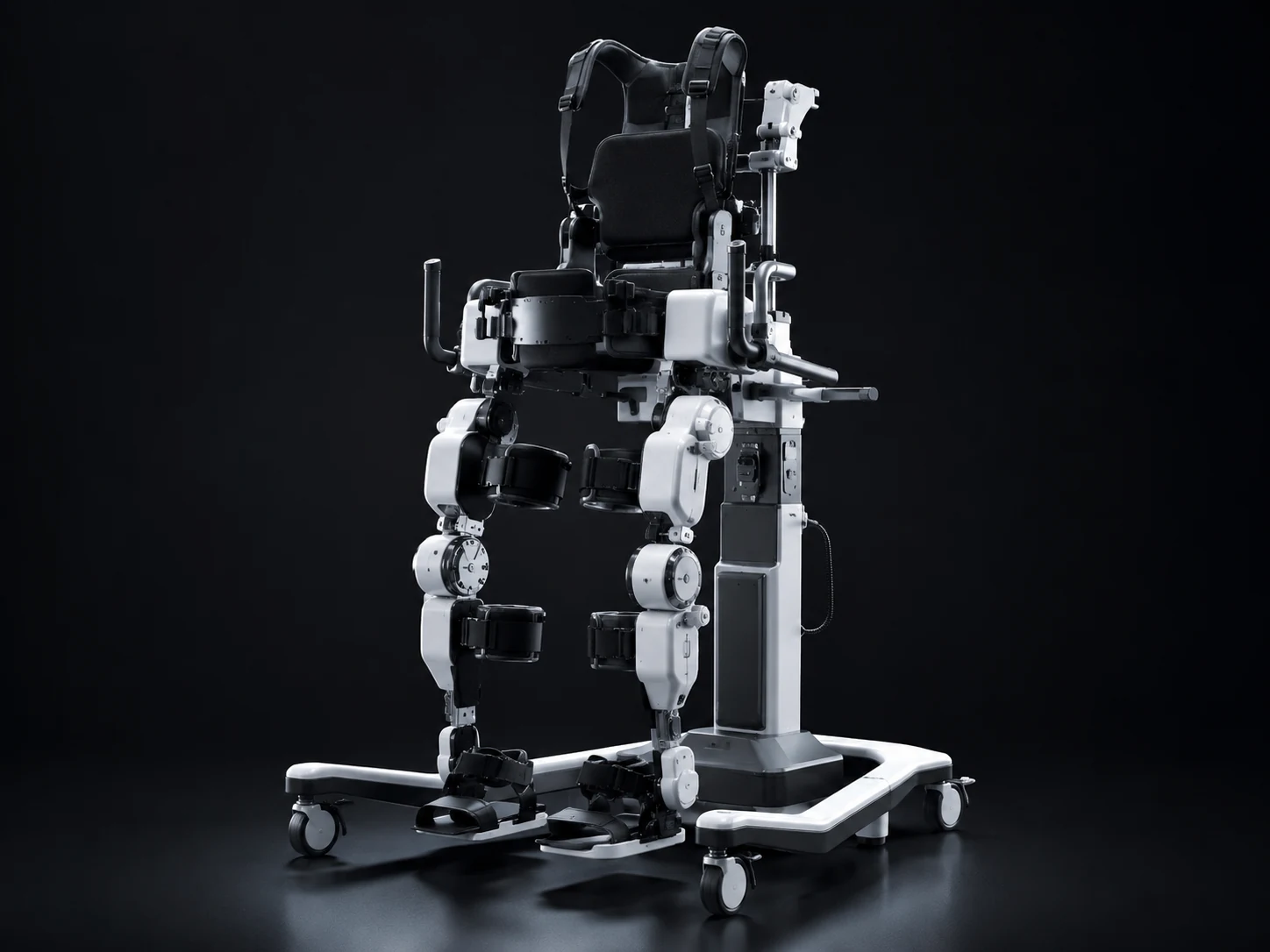
MEDICAL & REHABILITATION ROBOTS
Rehabilitation · Exoskeletons · Mobility assistance
These systems emphasize lightweight construction, motion accuracy and structural reliability for rehabilitation and human-assist applications.
CRITICAL TO QUALITY
| Critical item | Why it matters | Control focus |
|---|---|---|
| Multi-datum coaxiality | Affects alignment of the complete rotational motion chain | Common axis relationship among motor, reducer, bearings and encoder |
| Bearing seat geometry | Affects preload, rotational resistance and bearing life | Diameter, roundness, cylindricity, shoulder squareness and assembled condition |
| Reducer mounting interface | Affects output runout, vibration and repeatability | Locating pilots, mounting faces, output bearing and flange datum relationships |
| Encoder alignment | Mechanical installation error directly affects control accuracy | Eccentricity, radial/axial runout, readhead position and rotational datum |
| Axial stack-up & preload | Too loose causes play; too tight increases friction and heat | Tolerance stack of bearings, reducer, shims, covers and output structure |
| Stiffness & Lost Motion | Affects angular displacement, dynamic response and end-point accuracy | Combined stiffness of reducer, bearings, housing, output flange and interfaces |
| Torque sensor installation | Assembly stress can cause zero drift and measurement error | Flatness, parallelism, load-axis alignment and tightening consistency |
| Lightweighting & thermal stability | Thin-wall distortion and temperature change can alter critical fits | Machining distortion, local stiffness, heat path and dimensional stability |
ENGINEERING FAQ
RFQ REQUIREMENTS
PDF / DWG
STEP / IGES
Grade / Heat Treatment
Prototype / Pilot / Production
Tolerance / GD&T / CTQ
Bearing / Reducer / Motor
Stack-up / Preload / Torque
Anodizing / Blasting / Plating
CMM / Runout / Full Inspection
Batch / Material / Inspection Records
TECHNICAL RESOURCES
Upload your drawings. Our engineering team will provide a manufacturing review and quotation within 24 hours.